

 English

























































































































































































































































































































































































































![swimsuit edition [abbb] - 1.20 21 swimsuit edition - chapter](https://mymagazine.blog/wp-content/uploads/2025/09/swimsuit-edition-abbb-1.20-21-swimsuit-edition-chapter1-1024x574.webp)





Christopher Stokowski: Life, Family & Biography

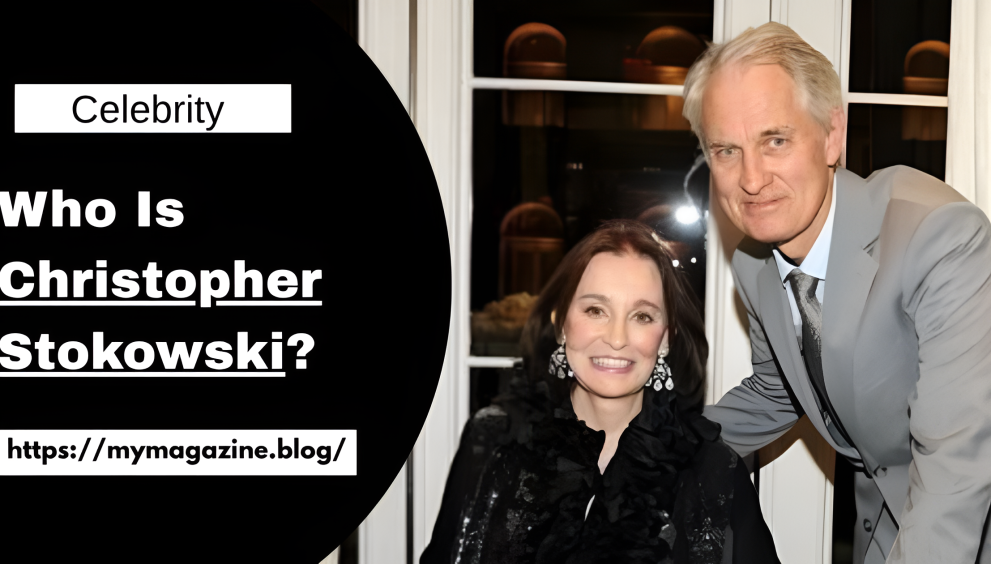
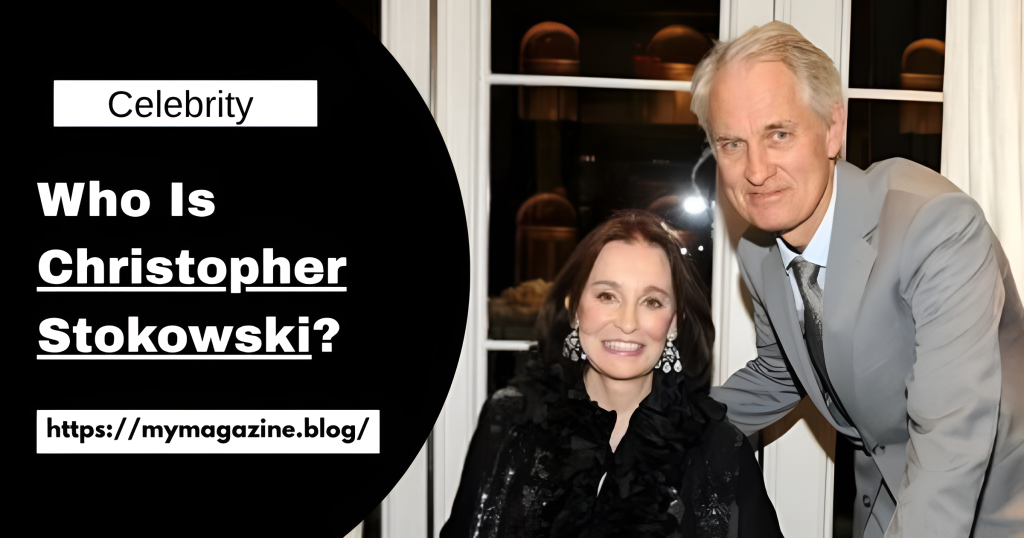
Christopher Stokowski occupies an unusual place in American cultural history. His name connects three very different worlds: the extraordinary musical career of conductor Leopold Stokowski, the fashion, artistic, and social legacy of Gloria Vanderbilt, and the famously complicated Vanderbilt family story. Yet despite being born into one of the most recognizable families in the United States, Christopher has spent much of his adult life away from the kind of publicity that surrounded his parents and later followed his half-brother, Anderson Cooper.
That contrast is perhaps the most interesting thing about Christopher Stokowski. His story is not primarily about celebrity appearances, entertainment credits, or a public career carefully documented in newspapers. Instead, it is about a person whose family background placed him close to fame while his own choices appear to have moved him in the opposite direction. Public information about him remains limited, and that absence is important: it prevents a responsible biography from turning speculation into fact.
Christopher was born in New York in 1952, the second son of Leopold Stokowski and Gloria Vanderbilt. His father was one of the best-known conductors of the twentieth century, while his mother was an heiress who reinvented herself as an artist, writer, designer, and public personality. The marriage between his parents lasted from 1945 until 1955 and produced two sons, Leopold Stanislaus “Stan” Stokowski and Christopher.
The family circumstances surrounding his childhood were therefore anything but ordinary. Christopher grew up connected to American wealth, classical music, fashion, art, and high society. At the same time, his later life became notably private. That combination makes Christopher Stokowski a fascinating figure—not because he constantly sought attention, but because he largely avoided it.
Christopher Stokowski at a Glance
| FactDetails | |
|---|---|
| Full Name | Christopher Crysostom Stokowski |
| Date of Birth | January 31, 1952 |
| Place of Birth | New York City, New York, United States |
| Nationality | American |
| Profession | Private individual; public sources have described an interest or connection to music, but a detailed professional career is not reliably documented |
| Known For | Being the son of Leopold Stokowski and Gloria Vanderbilt and the half-brother of Anderson Cooper |
| Years Active | Not applicable as a conventionally documented public career |
| Net Worth | No reliable public figure can be established |
| Marital Status | Not reliably established in authoritative public records |
| Spouse | No reliably established public information |
| Children | No reliably established public information |
| Notable Works / Achievements | No widely documented public works or formal career achievements; his significance largely comes from his family history and exceptionally private life |
Born Into Two Extraordinary Legacies
To understand Christopher Stokowski, it helps to look beyond the surname and consider the two sides of his family.
His father, Leopold Stokowski, was an internationally celebrated conductor whose career stretched across much of the twentieth century. He conducted major orchestras, became closely associated with the Philadelphia Orchestra, embraced recording and broadcasting, and reached audiences outside traditional concert halls through film. His work on Disney’s Fantasia became one of the most recognizable intersections between classical music and popular culture.
Leopold Stokowski’s career was unusual even by the standards of famous conductors. He was not simply a figure confined to the concert stage. He understood the growing influence of radio, records, cinema, and mass media, helping classical music reach audiences far beyond the traditional concert-going public.
Christopher’s mother represented a completely different form of cultural visibility.
Gloria Vanderbilt was born into the Vanderbilt family, one of America’s most famous wealthy dynasties. Her childhood was marked by a highly publicized custody dispute, and she eventually developed an identity that extended far beyond inherited wealth. She worked as an artist, actress, writer, designer, and fashion entrepreneur. Her later designer-jeans business became especially influential in the fashion market.
Christopher therefore entered the world with an extraordinary surname on both sides of his family tree. The Stokowski name carried musical prestige, while the Vanderbilt name carried a much older association with American wealth and society.
That background naturally created public interest in him. But it is also important not to assume that being born into such a family automatically meant Christopher wanted a public career.
A Childhood Surrounded by Music, Art and Public Attention
Christopher was born on January 31, 1952, in New York City. Contemporary biographical records identify him as the younger of Gloria Vanderbilt’s two sons with Leopold Stokowski.
His parents’ marriage ended when Christopher was still very young. Gloria Vanderbilt and Leopold Stokowski divorced in 1955 after ten years of marriage. Vanderbilt subsequently married film director Sidney Lumet and later writer Wyatt Cooper. Her marriage to Wyatt Cooper produced two more sons, Carter Vanderbilt Cooper and Anderson Cooper.
As a result, Christopher’s immediate family became increasingly complex as he grew older. He had an older brother, Stan Stokowski, as well as younger maternal half-brothers from his mother’s later marriage.
The family also carried several different professional traditions. His father’s world revolved around orchestral music and performance. His mother’s world encompassed art, writing, fashion, design, and celebrity culture. Christopher was therefore raised within an environment in which creativity and public visibility were both highly familiar.
Yet familiarity with fame is not the same as a desire for fame.
That distinction becomes central to understanding his adult identity.
For readers interested in the broader stories behind famous families, a carefully researched celebrity biography collection can provide useful context, but Christopher’s story stands apart from the typical celebrity profile because so much of his adult life has remained outside the public record.
The Stokowski Name Came With Its Own History
Christopher inherited more than a famous surname from his father.
Leopold Stokowski was born in London in 1882 and eventually established himself as a major figure in American classical music. His career included leadership positions with important orchestras, recording projects, film work, and the creation of musical organizations. He founded the American Symphony Orchestra in New York and continued working well into old age.
His reputation was therefore already firmly established long before Christopher was born.
The significance of this family connection should not be underestimated. Christopher was the son of a conductor whose public image was associated with artistic ambition, experimentation, and enormous professional visibility. His father’s celebrity was not based on a short-lived entertainment career; it was the result of decades of influence within classical music.
That history helps explain why people searching for Christopher Stokowski often encounter information about Leopold first. In many respects, Christopher’s name is inseparable from the legacy of the man who carried it before him.
But Christopher did not simply reproduce his father’s public identity.
Gloria Vanderbilt’s Influence Was Just as Significant
If Leopold Stokowski gave Christopher a connection to classical music, Gloria Vanderbilt provided an equally complicated connection to American culture.
Vanderbilt became famous at a young age because of the custody battle over her childhood and her family’s fortune. As she grew older, she gradually transformed herself from heiress and social figure into a creative professional. She worked in fashion, art, writing, theater, and design. Her career eventually included a highly recognizable fashion brand, particularly associated with designer jeans.
Her life was therefore a story of reinvention.
That matters when considering Christopher because his family environment was not simply wealthy. It was unusually creative. His parents were both associated with artistic fields, although in very different ways.
Gloria’s later life also ensured that Christopher remained connected to a family that continued attracting media attention. Her relationships, creative work, and children became recurring subjects of public interest.
Christopher, however, gradually became the less visible member of that family.
Education and the Search for an Independent Identity
Public accounts have associated Christopher Stokowski with Bard College in New York, although detailed information about his academic experience is limited. Because his life has not been documented like that of a conventional celebrity, it is difficult to reconstruct his education with the same precision available for his parents or half-brother.
This lack of detail is worth acknowledging rather than filling with assumptions.
For someone born into a family where virtually every generation attracted attention, education could have represented one of the places where Christopher began developing an identity independent of his family name. However, the public record does not provide enough information to describe his student years in detail without moving into speculation.
The same caution applies to claims about his professional ambitions.
Various online biographies have described Christopher as having a connection to music or classical music. Some have gone further and suggested that he worked privately or under another identity. Those claims circulate widely, but they are not supported by enough authoritative documentation to present them as established facts.
A responsible profile should therefore distinguish between what is documented and what has merely been repeated.
That distinction is particularly important in the case of Christopher Stokowski because his privacy has created an information gap that internet biographies sometimes attempt to fill.
Why Christopher Stokowski Became Such a Private Figure
Christopher’s withdrawal from the public spotlight is one of the defining elements of his story.
The exact reasons behind his private lifestyle cannot be reduced to a single confirmed explanation. However, published accounts have long connected his distance from his family with events involving his mother and her personal life during the 1970s.
Because these events involve private family matters, they deserve careful treatment.
What can reasonably be said is that Christopher became increasingly distant from the family environment that had previously surrounded him. This separation contributed to the public perception that he had deliberately stepped away from the world of celebrity.
The contrast became especially striking because his family continued to attract attention.
His mother remained a recognizable cultural figure. His younger half-brother Anderson Cooper eventually became a prominent television journalist. Gloria Vanderbilt continued appearing in interviews, documentaries, books, and fashion retrospectives.
Christopher, meanwhile, remained largely absent from the media.
That absence eventually became part of his identity.
Christopher and Anderson Cooper: Two Very Different Public Paths
One of the most frequently searched aspects of Christopher Stokowski’s life is his relationship with Anderson Cooper.
Christopher and Anderson Cooper are maternal half-brothers. Christopher was born to Gloria Vanderbilt and Leopold Stokowski, while Anderson was born to Vanderbilt and her fourth husband, writer Wyatt Cooper.
Their paths could hardly have been more different.
Anderson Cooper built a highly visible career in journalism and television. His professional life placed him directly in front of cameras, while Christopher’s adult life became associated with privacy and distance from media attention.
This difference makes their family relationship particularly interesting.
They share a mother and therefore a substantial part of their family history, but they came to represent almost opposite approaches to public life. Anderson became a household name through journalism. Christopher became known primarily because people were curious about the private member of an exceptionally famous family.
That is a fascinating reversal of the usual celebrity narrative.
The Family Connection That Keeps His Name in the Public Conversation
Christopher Stokowski continues to attract interest partly because the Vanderbilt family remains one of America’s best-known dynasties.
The Vanderbilt fortune has a long history, but Christopher’s immediate connection is specifically through his mother, Gloria Vanderbilt. Her father was Reginald Claypoole Vanderbilt, while her family background connected her to the larger Vanderbilt dynasty.
Christopher therefore belongs to a family tree that includes business magnates, artists, designers, journalists, conductors, actors, and other prominent figures.
But it would be misleading to describe Christopher simply as a Vanderbilt heir.
His identity is equally Stokowski, and the Stokowski side of the family carries a major artistic legacy. His father’s influence on classical music was substantial enough to remain relevant decades after Leopold’s death.
The combination of these two surnames explains much of the continuing curiosity surrounding Christopher.
A Life Defined More by Privacy Than Celebrity
Celebrity biographies usually depend on a large archive of public material: interviews, red-carpet appearances, television programs, social media accounts, professional credits, and statements made directly by the subject.
Christopher Stokowski presents almost the opposite situation.
There is no extensive public interview archive documenting his thoughts on fame. There is no large body of professional work that allows readers to trace his career year by year. There is no dependable public financial disclosure that supports the many net-worth estimates found on low-quality biography websites.
That makes privacy itself an important part of the story.
Christopher’s public identity has developed largely through his family connections rather than through an extensive personal media presence. In other words, people know about him far more than they know from him.
That difference should shape how his life is discussed.
What Is Known About His Career?
This is one of the areas where caution is most necessary.
Christopher has frequently been associated online with music, presumably because of his father’s extraordinary musical background. Some publications characterize him as a musician or classical musician. Others make more specific claims about private professional work.
However, a detailed, independently verifiable record of a sustained public music career is not readily available.
It would therefore be inaccurate to construct an elaborate discography, list performances that cannot be verified, or claim that Christopher achieved specific professional milestones without solid documentation.
The safest characterization is that Christopher has been linked in public biographies to music, but his professional activities have largely remained outside the conventional public record.
That uncertainty is not a weakness in the biography. It is a fact about the subject.
A strong profile should sometimes say less rather than turn an absence of evidence into a story.
Christopher Stokowski and the Question of Net Worth
Search interest in Christopher Stokowski’s net worth is understandable.
He was born into a family associated with both the Vanderbilt fortune and the considerable career success of Leopold Stokowski. Gloria Vanderbilt also built a successful career independent of her inheritance, particularly through fashion and design.
However, family wealth should not automatically be converted into a personal net-worth figure.
There is no sufficiently reliable public financial record that allows a responsible estimate of Christopher’s present-day wealth. Online figures that attach a precise dollar amount to his name should therefore be treated with skepticism unless supported by credible documentation.
The distinction between family history and personal finances is particularly important in this case. Being a descendant or child of a wealthy family does not tell us what assets an individual personally owns, inherited, transferred, invested, or donated.
For that reason, a precise Christopher Stokowski net worth figure cannot be responsibly presented as fact.
His Mother’s Legacy Keeps Bringing Him Back Into Focus
Gloria Vanderbilt died in 2019 at the age of 95. By then, her life had already become much larger than the story of the young heiress who once dominated newspaper headlines.
She had become an artist, author, designer, fashion entrepreneur, and mother whose family history continued to interest several generations. Her life was revisited in books, documentaries, interviews, and retrospectives.
Her relationship with her sons also became part of the public story.
In 2016, Vanderbilt and Anderson Cooper appeared together in the documentary Nothing Left Unsaid, giving audiences a remarkably personal look at their relationship and Vanderbilt’s memories.
Christopher’s relative absence from such public moments naturally increased curiosity.
People often wonder why one member of a famous family remains out of sight while another becomes a major media personality. But privacy does not necessarily require a dramatic explanation. Some people simply prefer a life removed from public scrutiny.
Christopher’s story is a useful reminder that not every person born into celebrity wants to participate in it.
The Significance of the Stokowski-Vanderbilt Family
The story surrounding Christopher is bigger than one individual.
His family connects several strands of twentieth-century American cultural life. Leopold Stokowski represents the expansion of classical music into radio, recordings, film, and mass culture. Gloria Vanderbilt represents the transformation of inherited social prominence into an independent creative career. Anderson Cooper represents modern television journalism.
Christopher sits between these worlds without becoming a major public figure himself.
That makes his position unusual.
He is part of a family whose members repeatedly entered the cultural spotlight, but his own story demonstrates how an individual can remain comparatively invisible despite an extraordinary family background.
For readers exploring family histories, the story also illustrates the difference between genealogy and celebrity. Knowing where someone comes from does not necessarily tell us what that person wanted from life.
Misconceptions About Christopher Stokowski
Because information about Christopher is limited, several misconceptions have developed around his name.
He Is Not the Same Person as His Father
The Stokowski surname can cause confusion, particularly because Leopold Stokowski was such a major public figure. Christopher is his son, not another version of the famous conductor.
He Is Not Anderson Cooper’s Full Brother
Christopher and Anderson Cooper share Gloria Vanderbilt as their mother, but they have different fathers. Christopher’s father was Leopold Stokowski, while Anderson’s father was Wyatt Cooper.
His Family Background Does Not Establish His Personal Wealth
The Vanderbilt connection is historically significant, but it does not justify assigning Christopher a specific net-worth figure.
Limited Public Information Does Not Prove a Secret Career
Claims that Christopher has worked anonymously or under an alias should not automatically be treated as established facts simply because they appear repeatedly online.
The most accurate biography is sometimes the one that refuses to turn uncertainty into certainty.
Why People Still Search for Christopher Stokowski
Interest in Christopher has several layers.
Some readers encounter his name while researching Gloria Vanderbilt. Others discover him while exploring Anderson Cooper’s family. Classical-music enthusiasts may come across him because of Leopold Stokowski. Still others are intrigued by the broader Vanderbilt family tree.
But there is another reason.
Christopher represents something unusual in celebrity culture: the famous person’s family member who did not become a celebrity himself.
In an age when personal lives can be documented continuously through social media, interviews, photographs, and public appearances, Christopher’s relative absence feels almost mysterious.
That mystery should not be confused with evidence of scandal.
Privacy is itself a legitimate life choice.
The Broader Legacy of Leopold Stokowski
Any discussion of Christopher’s family background eventually returns to Leopold Stokowski.
The elder Stokowski’s career changed the way many audiences experienced orchestral music. His work with the Philadelphia Orchestra became particularly important, and his willingness to experiment with recording, broadcasting, and film helped broaden the reach of classical repertoire. His association with Fantasia introduced his conducting style to audiences who might never have attended a traditional orchestral concert.
He also continued working at an extraordinary age. The American Symphony Orchestra, which he helped establish in New York, became part of his later career.
Christopher inherited the family name of a man who had spent decades building a cultural legacy.
Yet inheritance of a name does not require inheritance of a profession.
That is one of the clearest themes running through Christopher’s story.
The Broader Legacy of Gloria Vanderbilt
Gloria Vanderbilt’s legacy is equally complex.
She became famous before she had control over her own public identity, but she spent much of her adult life creating new identities for herself. She explored acting, writing, painting, fashion, and design rather than remaining solely an heiress.
Her designer jeans became especially recognizable, demonstrating how she turned her name into a commercial brand while maintaining an artistic identity.
She also became an author and chronicler of her own experiences. Her memoirs and later conversations provided insight into a life shaped by wealth, family conflict, relationships, motherhood, creativity, and loss.
For Christopher, that means his mother’s legacy is not simply a matter of money or social status. It is also a legacy of reinvention.
What Makes Christopher’s Story Different?
The central tension in Christopher Stokowski’s biography is simple: he was born into a world that rewarded visibility, yet his adult story became associated with privacy.
That makes his life different from the standard celebrity narrative.
There is no reason to judge that choice as a failure to capitalize on his family name. On the contrary, remaining outside the spotlight can require a deliberate rejection of the expectations attached to a famous surname.
Christopher’s story is therefore less about what he did to become famous and more about what it means to live privately when fame has already been assigned to you by birth.
That is why his biography remains compelling despite its limited public documentation.
Christopher Stokowski’s Place in Modern Family History
Today, Christopher is remembered largely through the people around him.
His father remains an important figure in classical music history. His mother remains an influential cultural figure whose career crossed fashion, art, writing, and celebrity. His half-brother Anderson Cooper remains one of America’s best-known journalists.
Christopher’s position is quieter.
He is a bridge between different generations of an extraordinary American family. His life connects the Stokowski musical legacy with the Vanderbilt social and cultural legacy and with the later media career of the Cooper family.
But his significance does not depend on having a long list of awards or public achievements.
Sometimes a person’s place in history comes from the unusual circumstances surrounding their life.
Christopher Stokowski is one such case.
Frequently Asked Questions About Christopher Stokowski
Who is Christopher Stokowski?
Christopher Stokowski is the son of renowned conductor Leopold Stokowski and American heiress, artist, designer, and author Gloria Vanderbilt. He was born in New York City in 1952 and is the maternal half-brother of journalist Anderson Cooper.
When was Christopher Stokowski born?
Public biographical records identify Christopher Stokowski’s birth date as January 31, 1952, in New York City.
Who are Christopher Stokowski’s parents?
His parents were Leopold Stokowski, the internationally known classical conductor, and Gloria Vanderbilt, the artist, fashion designer, writer, and member of the Vanderbilt family. They married in 1945 and divorced in 1955.
Is Christopher Stokowski related to Anderson Cooper?
Yes. Christopher Stokowski and Anderson Cooper are maternal half-brothers. Both are sons of Gloria Vanderbilt, but they have different fathers.
What does Christopher Stokowski do for a living?
A detailed, authoritative public record of Christopher’s professional career is not available. Some biographies associate him with music, but more specific claims about his professional activities should be treated cautiously because they are not sufficiently documented.
Did Christopher Stokowski become a musician like his father?
Christopher has been described in some public accounts as having a connection to music, but there is not enough reliable documentation to construct a definitive public career history comparable to that of his father, Leopold Stokowski.
What is Christopher Stokowski’s net worth?
There is no reliably documented public figure that establishes Christopher Stokowski’s personal net worth. His connection to the Vanderbilt and Stokowski families should not be mistaken for proof of a particular personal fortune.
Why is Christopher Stokowski so private?
Christopher has largely stayed outside mainstream media attention, but the precise reasons for every aspect of his private life cannot be established from reliable public documentation. It is therefore more accurate to describe him as a notably private member of a famous family than to assign motives that he has not publicly confirmed.
For additional background on notable people, families, and cultural figures, readers can also explore this broader magazine-style collection of biographies and profiles.
Final Perspective on Christopher Stokowski
Christopher Stokowski’s story stands out because it resists the usual expectations attached to a famous family.
He was born to two extraordinary parents. His father was one of the defining conductors of the twentieth century, while his mother transformed herself from a celebrated heiress into an artist, writer, fashion entrepreneur, and cultural personality. His extended family includes one of America’s most recognizable dynasties, and his younger maternal half-brother became a major television journalist.
Yet Christopher did not follow the obvious path toward public recognition.
Instead, his life became associated with distance from the spotlight. That makes him an unusual figure in the history of American celebrity families. His biography is not a conventional account of awards, blockbuster appearances, or a highly publicized career. It is a story about identity, family expectations, and the possibility of choosing privacy despite being born into extraordinary circumstances.
The most important takeaway is therefore not an unverified net-worth number or a speculative account of his private activities. It is the contrast between Christopher’s family legacy and his own low public profile.
To understand Christopher Stokowski, one has to understand both sides of his inheritance: the musical world of Leopold Stokowski and the artistic, social, and entrepreneurial world of Gloria Vanderbilt. But understanding his family does not mean pretending to know everything about him.
That boundary is especially important in his case.
Christopher’s place in public memory may have begun with his famous parents, but the enduring curiosity around his life comes from something more subtle: he appears to have chosen a quieter existence in a family where almost everyone else became part of the public record. His story consequently offers a different perspective on fame—not the pursuit of it, but the possibility of stepping away from it.
For readers wanting a broader reference point, the Wikipedia entry on Gloria Vanderbilt provides useful background on the family and the life of Christopher’s mother.
Ultimately, Christopher Stokowski remains interesting precisely because so much of his life belongs to him rather than to the public. In a culture fascinated by famous names, his story demonstrates that privacy can become one of the most defining characteristics of a person’s public identity.
For More Visits: Mymagazine