

 English



















































































































































































































































































































































































































![swimsuit edition [abbb] - 1.20 21 swimsuit edition - chapter](https://mymagazine.blog/wp-content/uploads/2025/09/swimsuit-edition-abbb-1.20-21-swimsuit-edition-chapter1-1024x574.webp)





How Businesses Can Reduce Downtime Through Proactive Monitoring


Downtime can slow your business, frustrate customers, and drain valuable resources. Even a short outage can lead to lost revenue and missed opportunities. The good news is that many network issues can be avoided with proactive monitoring. By keeping a close eye on your systems and spotting problems early, your business can take action before small issues turn into major disruptions.
Proactive monitoring helps improve performance, reduce risk, and keep everything running smoothly. In this blog, we’ll explore how your business can cut downtime with proactive monitoring and stay reliable, efficient, and ready to grow.
Building Blocks of Proactive Monitoring Infrastructure
Effective monitoring isn’t about purchasing expensive dashboards. It’s about gaining genuine visibility across your complete technology ecosystem. Achieving that visibility demands comprehensive network performance monitoring tools covering every essential layer—servers, databases, applications, network devices—providing constant insight that catches issues early and prevents them from exploding into expensive outages.
Tracking System Performance in Real Time
Your infrastructure generates thousands of data points each second. CPU spikes happen, memory fills up, disk space shrinks, network lag fluctuates. Real-time tracking captures everything, establishing healthy baselines so abnormalities immediately stand out.
Application metrics show how actual users experience your systems. Database query performance exposes bottlenecks before they strangle operations. Network bandwidth tracking spots congestion before customers experience slowdowns.
Predictive Analytics and Spotting Anomalies
Machine learning shines at detecting patterns humans overlook. These algorithms examine historical information, recognize trends, and highlight unusual behavior signaling approaching trouble. Seasonal fluctuations get automatically accounted for, preventing holiday traffic from triggering false warnings.
Behavioral analytics catch subtle shifts that precede failures. Gradually climbing error rates, slowly deteriorating response times, strange access patterns—intelligent analysis makes all of it visible. This kind of proactive monitoring for businesses addresses problems while they’re still manageable.
Strategic Implementation: Constructing Your Monitoring Framework
Rushing into deployment without adequate planning burns resources and leaves coverage holes. Intelligent implementation follows a clear path aligning technology with business priorities.
Assessment and Planning Phase
Begin with comprehensive infrastructure auditing. Map critical systems, document dependencies, identify your most vulnerable points. Which systems create the biggest headaches when they fail? Monitor those first.
Budget decisions should reflect business impact rather than IT preferences alone. Stakeholder alignment guarantees everyone understands what’s protected and why. When evaluating monitoring tools for companies, examine integration capabilities and total ownership costs beyond just feature lists.
Deployment Best Practices
Phased launches minimize disruption during rollout. Start with your most critical systems, demonstrate value, then systematically expand coverage. Integration with existing IT service management platforms ensures monitoring alerts flow directly into established workflows.
Customized alert thresholds stop notification overload while catching real issues. Your database hitting 80% CPU might be normal during month-end but alarming at 3 AM Tuesday. Context is everything. Proper team training converts monitoring from passive observation into active defense.
With your foundation established, let’s move beyond basic monitoring and explore advanced strategies that anticipate and prevent issues before they become expensive disasters.
Advanced Monitoring Strategies to Prevent IT Downtime
Basic monitoring reports when things break. Advanced strategies prevent IT downtime by automating responses and correlating data across systems to instantly understand root causes.
Automated Incident Response Protocols
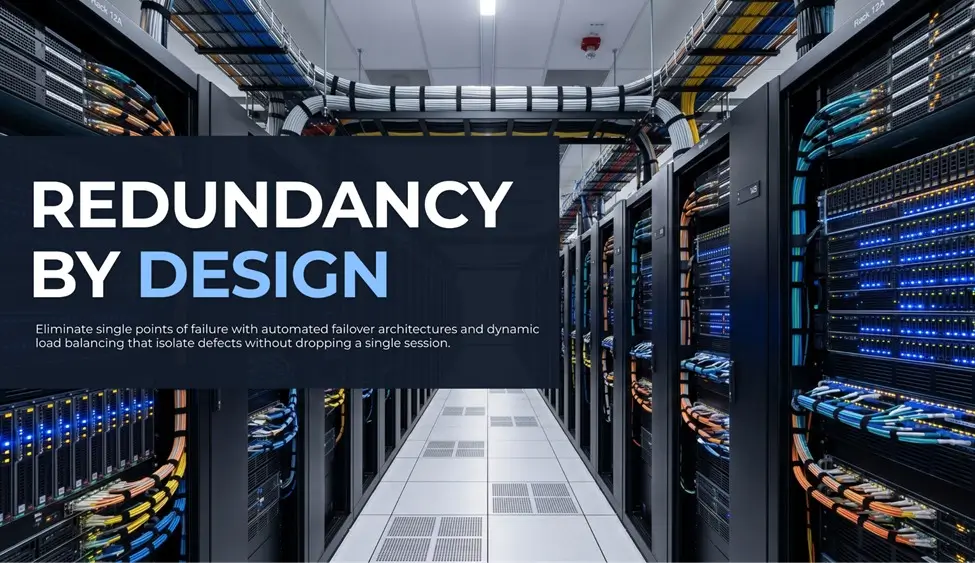
Self-healing configurations automatically fix common issues without human involvement. Low disk space? Automated cleanup executes. Service crash? Automatic restart triggers. Server overload? Load balancing redistributes traffic.
Orchestrated workflows handle complex recovery procedures faster than manual intervention. Processes requiring 30 minutes of technician time now complete in seconds. Runbook automation captures institutional knowledge, making it available 24/7 even when your experts are unavailable.
Intelligent Alert Management
Alert fatigue kills monitoring effectiveness. When everything generates notifications, nothing receives appropriate attention. Intelligent correlation cuts noise by grouping related alerts and identifying root causes among cascading failures.
Priority-based escalation ensures appropriate people get notified at the right moments. Minor issues reach on-call engineers. Critical failures alert managers. Context-enriched notifications include relevant data so responders understand situations before logging in. Research indicates 45% of MRO professionals reported reduced unplanned downtime in 2024, largely attributable to improved alert management .
Critical Metrics and KPIs for Business Continuity Solutions
Technology and strategy mean nothing without measurement—here are the vital metrics proving your monitoring efforts actually protect operations and deliver ROI.
Availability and Uptime Measurements
Service-level objectives define “good enough” for your organization. Does 99.9% uptime suffice, or do you require 99.99%? That gap represents several annual hours versus mere minutes of acceptable downtime.
Mean time between failures tracks how frequently issues occur. Improving this metric means longer uninterrupted system operation. Tracking scheduled versus unscheduled downtime separates planned maintenance from unexpected outages—only unplanned downtime damages customer relationships.
Response and Resolution Metrics
Mean time to detect measures how quickly monitoring identifies problems. Mean time to acknowledge track team response speed. Mean time to resolve captures and fix duration. Business continuity solutions depend on simultaneously minimizing all three.
Cultivating a Proactive Monitoring Culture
Technology alone won’t protect you from downtime. People determine whether monitoring tools gather dust or actually safeguard operations.
Cross-Functional Collaboration Models
DevOps and SRE teams demolish traditional silos between development and operations. Shared responsibility frameworks ensure everyone owns reliability, not exclusively IT. Incident communication protocols prevent chaos and blame.
Blameless post-mortem practices transform failures into learning opportunities rather than punishment sessions. When failures occur—and they inevitably will—teams analyze causes and prevention methods without targeting individuals.
Continuous Improvement Cycles
Regular strategy reviews ensure your approach evolves alongside your business. Tools require optimization and configuration adjustments as systems change. Alert thresholds need refinement based on actual experience. Documentation preserves lessons learned so knowledge survives personnel changes.
Your Questions About Proactive Monitoring Answered
How should companies monitor infrastructure performance to prevent system downtimes and ensure business continuity?
Establish continuous tracking for CPU usage, memory consumption, disk space, and network traffic to catch anomalies early. Configure alerts notifying IT teams about performance issues, failed services, or security threats, ensuring rapid response before minor problems escalate into major outages.
What is an example of proactive monitoring?
A monitoring tool continuously tracks server health and performance. When detecting a CPU usage spike, it alerts IT teams who can scale resources before performance issues impact users. This prevents problems rather than merely reacting after damage occurs.
How long does implementing comprehensive monitoring take?
Implementation timelines vary by complexity, but expect roughly 30 days for basic coverage, 90 days for comprehensive monitoring, and 180 days for advanced features like predictive analytics. Quick victories happen fast—critical system monitoring can launch within the first week.
Final Thoughts on Proactive Monitoring
Shifting from reactive firefighting to proactive prevention represents more than a technology upgrade. It’s a fundamental transformation in how organizations safeguard operations and serve customers. When you reduce business downtime through systematic proactive monitoring for businesses, you’re not merely saving money—you’re building resilience, protecting reputation, and creating competitive advantages. The question isn’t whether your business can afford comprehensive monitoring; it’s whether you can afford the catastrophic costs of remaining unprepared. Every prevented downtime minute strengthens your market position. Start constructing your monitoring strategy today, because the next system failure won’t wait until you’re ready.
For More Visits: Mymagazine