

 English







































































































































































































































































































































![swimsuit edition [abbb] - 1.20 21 swimsuit edition - chapter](https://mymagazine.blog/wp-content/uploads/2025/09/swimsuit-edition-abbb-1.20-21-swimsuit-edition-chapter1-1024x574.webp)





How to Differentiate Personalized Customer Experience for B2B and B2C Users

B2B buyers no longer behave like traditional corporate purchasers. They browse, compare, and decide like consumers. They expect speed, clarity, and relevance during every interaction. This shift creates pressure for retailers. Many struggle to separate business buyers from individual shoppers. As a result, the personalized shopping experience often feels inconsistent and unfocused.
Differentiation now matters more than scale. B2B and B2C users follow different paths, even when expectations appear similar. Retailers must recognize these differences early. A clear personalized customer experience helps brands serve each audience with intent. Distinct experiences protect value, trust, and long-term relationships.
Understanding B2B and B2C Audiences and Their Business Value
B2B ecommerce personalization audiences represent organizations, teams, and professional buyers. Their budgets, approvals, and lead time on purchase decisions are based on an organization’s efficiency, reliability, and long-term value. B2C audiences are made up of consumers who purchase products on behalf of themselves (their own behalf. Their decisions focus on emotion, convenience, and immediate satisfaction.
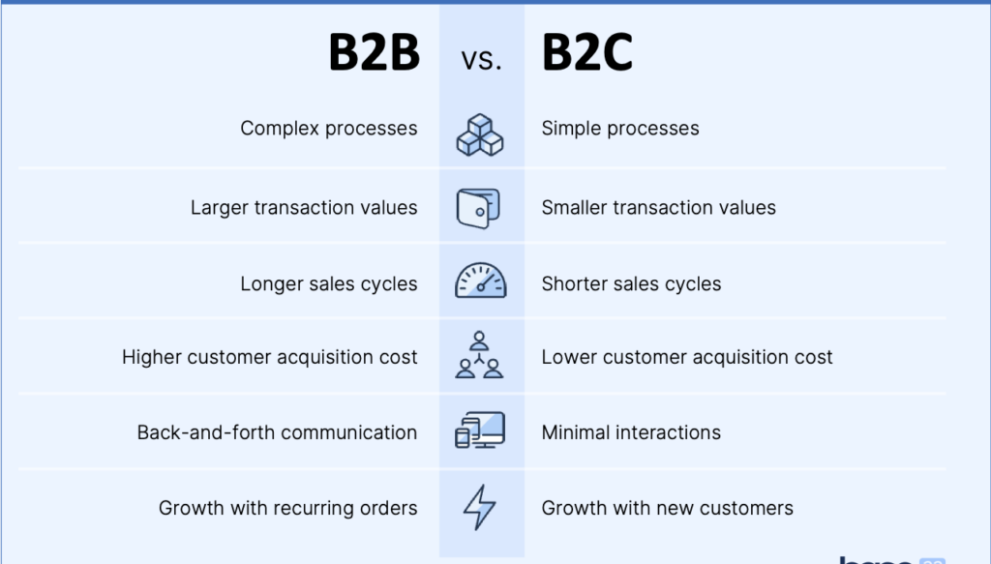
Several factors separate these audiences. B2B purchases are made on a business-to-business basis (business-to-business), versus B2C purchases, which are made by an individual. When a B2B organization makes a decision, it typically requires multiple decision makers, as well as longer lead times to evaluate multiple options and make the appropriate choices.
In contrast, B2C purchases can occur more often, but are generally made in smaller quantities with less decision-making time. There are significant differences between B2B and B2C buyers based on the frequency of purchases made and the value of those purchases, as B2B transactions take place much less frequently, yet carry higher price points than B2C transactions.
B2B customers provide business revenue predictability, long-term contracts, etc., while B2C customers provide volume and brand awareness/loyalty within a specific market. Therefore, retail businesses need to ensure their customer experiences align with B2B customer expectations and provide personalization for B2B customers.
In contrast, B2C customers expect retailers to provide personalization; however, due to there being a larger customer base, this may create strain on retailers that attempt to service both groups at the same time.
Factors to Differentiate Personalized Experiences for B2B and B2C users
Both B2B and B2C audiences contribute to growth in different ways. There is equal importance/weight to each group within the retail landscape. However, the segmentation of the groups will allow retailers to maintain relevance and provide both consistency and continuity within each group’s decision-making process. Retailers should respond to what customers need, not what they believe they know about a customer’s needs.
-
Decision-making Complexity
B2B decisions involve multiple stakeholders and extended evaluation cycles. Content should support comparison and internal discussion. B2C decisions often occur faster and rely on personal preference. A personalized shopping experience should simplify choices. Retailers should present structured information for B2B users. They should present guided options for B2C users.
-
Content Depth and Format
B2B users prefer detailed specifications, case studies, and pricing clarity. They review content carefully before making decisions. B2C users prefer visuals, summaries, and clear benefits. A personalized shopping experience adjusts content depth by audience type. This approach improves understanding and confidence.
-
Purchase Intent and Urgency
B2B buyers plan purchases around business cycles and forecasts. They value availability and contract stability. B2C buyers act on immediate needs or interests. A personalized customer experience should reflect timing expectations. Retailers can highlight long-term value for B2B users. They can highlight quick benefits for B2C users.
-
Pricing Structure and Visibility
B2B pricing often depends on volume, contracts, and negotiation. Clear breakdowns build trust. B2C pricing remains fixed and transparent. Discounts and offers influence behavior. A personalized customer experience should display pricing accordingly. Retailers should avoid showing irrelevant pricing models.
-
Relationship Duration and Expectations
B2B relationships develop over months or years. Consistency and reliability matter most. B2C relationships grow through repeated positive interactions. Emotional connection strengthens loyalty. A personalized shopping experience should reflect the relationship length. Retailers should prioritize stability for B2B users. They should prioritize engagement for B2C users.
-
Support and Communication Style
B2B users expect structured support and dedicated contacts. They value fast resolution and accountability. B2C users expect accessible support and self-service options. A personalized customer experience aligns communication tone with expectations. Retailers should maintain professionalism for B2B users. They should maintain friendliness for B2C users.
-
Buying Frequency and Order Patterns
B2B orders occur less often but involve higher quantities. Planning and reordering tools matter. B2C orders occur more frequently with smaller volumes. Convenience and speed matter more. A personalized shopping experience should reflect these patterns. Retailers can simplify repeat orders for B2B users. They can simplify checkout for B2C users.
Each factor helps retailers separate intent and expectation. Segmentation reduces friction across journeys. Clear differentiation protects brand credibility. It also improves engagement across channels.
Bottom Line
Personalization now shapes how brands compete across markets. B2B and B2C users share expectations but follow different paths. Retailers must design experiences with purpose. A thoughtful, personalized shopping experience supports relevance for every audience. A clear personalized customer experience builds trust and consistency.
Balance requires discipline and clarity. Retailers should align content, pricing, and support with audience needs. They should review performance across both segments regularly. Over time, this balance strengthens loyalty and sustainable growth. Relevance will continue to guide success across evolving customer landscapes.