
 English
















































































































































































































































































































































































































![swimsuit edition [abbb] - 1.20 21 swimsuit edition - chapter](https://mymagazine.blog/wp-content/uploads/2025/09/swimsuit-edition-abbb-1.20-21-swimsuit-edition-chapter1-1024x574.webp)





How Dental Nutrition Counseling Improves Oral Outcomes For Families

You brush teeth, buy toothpaste, remind your kids to rinse, and still end up hearing about cavities at checkups. That gets frustrating fast. For many families, the missing piece is not effort. It is food habits that quietly work against oral health every day, and an Albuquerque dentist can help spot the patterns, from frequent juice cups and sticky snacks to late night grazing after brushing.
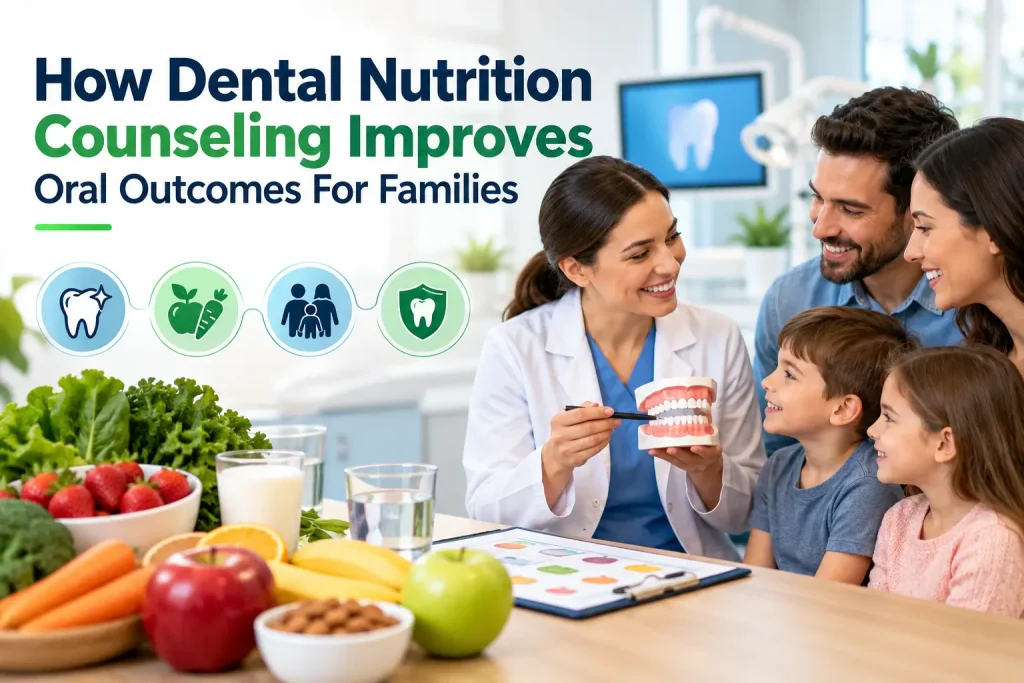
How Dental Nutrition Counseling Improves Oral Outcomes For Families comes down to one simple truth. Teeth do not live apart from the rest of the body. What your family eats, how often they eat, and what they sip between meals can raise or lower the risk of decay, gum irritation, enamel wear, and expensive treatment. A family dentist who offers nutrition guidance can help you connect those dots in a way that feels practical, not judgmental.
Family dental nutrition guidance changes daily habits that drive decay
Cavities rarely come from one candy bar or one missed brushing session. They build over time. Oral bacteria feed on sugars and starches, produce acid, and weaken enamel again and again during the day. If a child snacks often, drinks sweetened beverages slowly, or falls asleep after milk or juice, the mouth gets repeated acid attacks with very little recovery time.
That pattern affects adults too. Sports drinks, flavored coffee, energy drinks, dried fruit, crackers, and constant sipping can all keep the mouth in a cycle of acid exposure. If you have a busy household, this can feel normal because it is normal. It is also one reason families with good intentions still struggle with oral health.
Oral health nutrition counseling helps by making the advice specific. Instead of hearing “eat better,” you get clear guidance such as pairing snacks with meals, choosing water between meals, limiting sticky foods that cling to teeth, and watching how often sugar shows up during the day. The American Academy of Pediatric Dentistry outlines diet advice for children and teens that supports both growth and oral health in its dietary recommendations for infants, children, and adolescents.
This matters because the burden is not small. The CDC’s oral health surveillance findings show tooth decay remains common across age groups in the United States. Families often carry the cost in missed school, missed work, pain, and treatment bills that could have been reduced with earlier prevention.
Nutrition counseling from a family dentist supports prevention at every age
A toddler with a sippy cup habit, a school age child who grazes after school, a teen living on sports drinks, and a parent with dry mouth from medication do not need the same advice. General internet tips miss that. A family dentist can look at cavity history, enamel wear, gum inflammation, orthodontic appliances, and age specific routines, then match food guidance to what is actually happening in your home.
That makes prevention easier to follow. If your child has braces, a dentist may focus on reducing sticky snacks and sweet drinks that collect around brackets. If you have early gum problems, the conversation may include foods that support healing and habits that reduce inflammation. If your child has frequent cavities, the issue may be less about how much sugar they eat and more about how often it hits the teeth.
Research also points to the value of nutrition support inside dental care. A recent CDC published study on nutrition counseling in dental settings adds to the case that oral health visits can be a useful place to improve diet related behaviors. That matters for families because dental visits happen regularly and often catch patterns before they turn into larger problems.
Daily food choices create either steady protection or steady damage
Many families think in terms of “good” foods and “bad” foods, but the timing and form of food often matter just as much. A sweet snack eaten with a meal can be less harmful than the same snack nibbled over an hour. Cheese, nuts, crunchy vegetables, and water can help after meals. Juice, soda, gummies, fruit snacks, and chips can linger on teeth or keep acid levels high when they show up too often.
Diet counseling for oral health also helps remove guilt. You do not need a perfect pantry. You need a plan your family can repeat. Small shifts, done consistently, usually beat strict rules that last one week and disappear the next.
Home effort and professional nutrition counseling offer different results
| Approach | What it looks like | Likely benefit | Common limit |
| General advice at home | Cutting back on candy, brushing more, switching some drinks to water | Can lower sugar exposure and improve routine | Often misses hidden risks like snack frequency, bedtime habits, or acidic drinks |
| Online research | Reading articles, watching videos, trying popular diet tips | May raise awareness and offer ideas | Advice is broad and may not fit a child’s age, braces, cavity risk, or medical needs |
| Nutrition counseling with a family dentist | Reviewing food patterns, cavity history, enamel wear, and age specific habits | More targeted prevention, clearer priorities, better follow through | Requires honest tracking of habits and regular dental follow up |
The difference is usually not motivation. It is precision. Families do better when they know which one or two habits are causing the most damage and which swaps will actually help.
Small, immediate steps can improve oral outcomes for families
Track one normal day of eating and drinking. Write down meals, snacks, drinks, and timing. Include the handful of crackers in the car, the sports drink after practice, and the bedtime milk. Patterns become obvious when you see how often teeth are exposed.
Change what happens between meals. Water should be the default drink between meals for both kids and adults. If your family likes snacks, try to serve them at set times instead of allowing constant grazing. That gives the mouth time to recover.
Ask your family dentist for food specific guidance. Bring the food log to the next visit. Ask which habits are most likely raising cavity risk, whether acidic drinks are wearing enamel, and what changes would give the biggest return first. This makes the visit more useful than a standard reminder to brush and floss.
Families do not need blame. They need clear support that matches real life. When food choices and dental care work together, fewer cavities, less discomfort, and fewer surprise bills become much more realistic. If your household keeps dealing with the same oral health problems, schedule a visit with a family dentist and ask about nutrition counseling. That one conversation can change what happens at the next checkup.