 English




























































































































































































































































































































![swimsuit edition [abbb] - 1.20 21 swimsuit edition - chapter](https://mymagazine.blog/wp-content/uploads/2025/09/swimsuit-edition-abbb-1.20-21-swimsuit-edition-chapter1-1024x574.webp)




Why Higher Education Still Matters in a Skills-Driven Economy

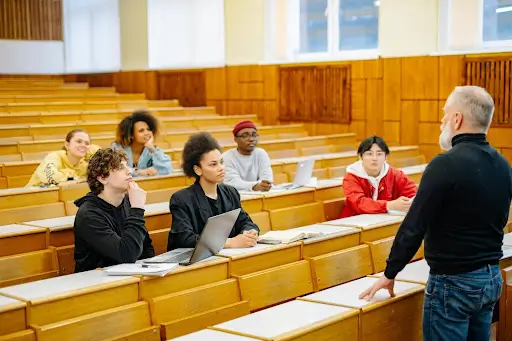
The modern job market is evolving faster than ever. Automation, artificial intelligence, and digital transformation are reshaping industries and redefining what employers expect from workers. Today, many people believe that practical skills alone are enough to succeed. While skills are undeniably important, higher education still holds significant value in shaping long-term career growth and professional stability.
In fact, many professionals continue to pursue a masters degree to deepen their expertise, specialize in their chosen field, and improve their career prospects in an increasingly competitive environment.
At the same time, companies are not only looking for technical ability but also for critical thinking, communication skills, and strategic understanding—qualities that are often developed through structured higher education programs.
The Shift Toward a Skills-Driven Economy
Over the past decade, the global economy has shifted toward skills-based hiring. Employers now prioritize what candidates can do rather than just what qualifications they hold. This has led to the rise of online certifications, short courses, and bootcamps in fields like coding, digital marketing, and data analysis.
However, while this shift has opened doors for many learners, it has also created a new challenge: oversaturation of short-term skills without deep foundational knowledge. As a result, employers are increasingly seeking individuals who can combine practical skills with strong academic grounding.
Why Higher Education Still Holds Strong Value
Despite the popularity of alternative learning paths, higher education continues to offer advantages that short-term training programs often cannot match.
1. Deep Subject Knowledge
University programs are designed to provide in-depth understanding of a subject rather than surface-level training. This depth allows graduates to solve complex problems and adapt to advanced roles more effectively.
2. Structured Learning Environment
Higher education provides a structured path that encourages discipline, consistency, and long-term learning habits. These qualities are essential for leadership and management positions.
3. Research and Analytical Skills
Students in higher education are trained to analyze data, conduct research, and evaluate information critically. These skills are highly valued in industries such as business, healthcare, engineering, and technology.
The Role of a Master’s Degree in Career Advancement
In many industries, undergraduate education alone is no longer enough to stand out. This is where postgraduate studies become important. A masters degree allows professionals to specialize in a specific area, whether it is business administration, computer science, public policy, or healthcare management.
More importantly, it helps individuals move beyond entry-level roles and qualify for leadership positions. Employers often view postgraduate qualifications as a sign of dedication, expertise, and long-term commitment to a field.
In competitive job markets, this advanced qualification can make a significant difference in salary potential, job security, and promotion opportunities.
Skills vs Education: Finding the Right Balance
It is important to understand that the debate is not about choosing skills over education or vice versa. Instead, the real advantage lies in combining both.
For example:
- Technical skills help you perform tasks efficiently.
- Higher education helps you understand why those tasks matter and how to improve them.
- Together, they create a well-rounded professional profile.
Employers increasingly prefer candidates who can demonstrate both practical ability and theoretical understanding.
How Employers View Higher Education Today
Modern employers have a more flexible approach to hiring than in the past, but education still plays an important role in decision-making. For many roles, especially in competitive industries, a degree is still considered a basic requirement.
Additionally, candidates with higher education qualifications often:
- Adapt more easily to complex tasks
- Show stronger problem-solving abilities
- Communicate more effectively in professional settings
- Demonstrate long-term commitment to career growth
These traits are difficult to measure through short courses alone.
The Future of Education in a Skills-Based World
The future of education is not about replacing degrees with skills but about integrating both approaches. Universities are already adapting by offering more practical programs, internships, and industry collaborations. At the same time, professionals are increasingly combining formal education with flexible online higher education courses to develop industry-relevant expertise alongside academic knowledge. This balanced approach helps individuals remain both knowledgeable and adaptable in rapidly evolving industries.
Conclusion
In a skills-driven economy, it is easy to assume that traditional education is losing relevance. However, the reality is quite different. Higher education continues to play a crucial role in developing critical thinking, deep knowledge, and professional credibility.
While skills are essential for immediate job performance, higher education provides the foundation needed for long-term career growth. For many professionals, pursuing advanced studies such as a masters degree remains one of the most effective ways to stay competitive and succeed in a rapidly evolving world.