
 English






































































































































































































































































































































































































![swimsuit edition [abbb] - 1.20 21 swimsuit edition - chapter](https://mymagazine.blog/wp-content/uploads/2025/09/swimsuit-edition-abbb-1.20-21-swimsuit-edition-chapter1-1024x574.webp)





Teen Drivers: What Parents Are Actually on the Hook For

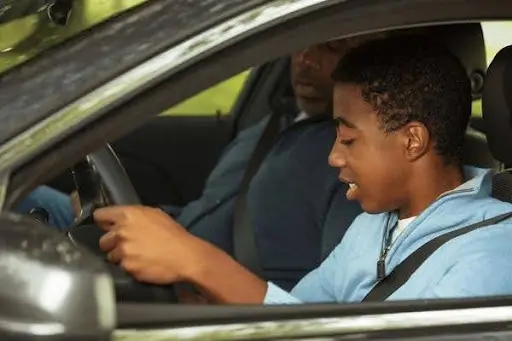
Most parents think about teen driving risk in terms of safety — the right car, the right rules, enough practice before the license test. What they think about less is the legal and financial exposure that comes with handing over the keys. When a teen causes a serious accident, the consequences land on the parents in ways that go well beyond a premium increase. Understanding that exposure — and taking steps that reduce it — starts with choosing safest cars for teen drivers and extends through the legal frameworks that determine what parents owe when things go wrong.
Those frameworks are less forgiving than most parents realize.
The Family Purpose Doctrine: Liability That Does Not Require Fault
Colorado is among the states that recognize the family purpose doctrine, a legal theory that holds vehicle owners liable for accidents caused by family members driving for family purposes. The critical feature of this doctrine is that it does not require the parent to have done anything wrong. The analysis is simpler: Did the parent own the vehicle? Did the teen have permission to use it? Was the teen driving for a family purpose?
If the answers are yes, the parent may be liable for the damages the teen caused — regardless of whether the parent had any reason to believe the teen was unsafe, and regardless of whether the parent was present or even aware the teen had taken the car.
Colorado’s family car doctrine states that the parents of a teen who gets behind the wheel for a “family purpose” can be liable if that teen causes an accident. Provided the teen has been given access to a vehicle, this “family purpose” can be nearly any errand or activity that fits within the ordinary pattern of family life.
The scope of what counts as a family purpose is broad in practice. Driving to school, running an errand for a parent, picking up a sibling, going to a family friend’s house — courts have found family purpose in a wide range of routine activities. The doctrine is not limited to trips the parent explicitly authorized. If the teen generally had permission to use the vehicle, that permission can be found to extend to the specific trip where the accident occurred.
Negligent Entrustment: When the Parent’s Knowledge Matters
Where the family purpose doctrine asks only about ownership and permission, negligent entrustment asks a different question: did the parent know — or should the parent have known — that the teen was likely to cause harm?
Colorado appellate courts expressly adopted negligent entrustment as a theory of liability in Colorado in the case of Hasegawa v. Day, an important case that allowed victims of a Colorado car accident to use this doctrine to recover appropriate compensation for their losses.
Negligent entrustment applies when a parent knows or should know that their teen is a danger to others on the road and fails to take reasonable steps to prevent the teen from driving or otherwise lessen the risk of harm. License suspensions, prior accidents, lack of driving experience, and past driving infractions are common examples of how a parent might come by this knowledge.
The practical consequences are significant. A parent who negligently entrusts their vehicle to a dangerous teen will probably be liable both individually and jointly with their teen for any injuries or property damage, and a parent’s financial risk usually is not limited.
What this means in concrete terms: a parent who allows a teen with a suspended license to drive, who gives keys to a teen they know has been racing or driving recklessly, or who provides a vehicle to a teen whose driving record shows a pattern of unsafe behavior, has created a negligent entrustment claim that goes beyond the family purpose doctrine. The damages are not capped at the vehicle’s value or any arbitrary limit — they extend to the full extent of the harm the teen caused.
Colorado’s Graduated Driver Licensing Restrictions
Colorado’s Graduated Driver Licensing program imposes specific restrictions on new teen drivers that are directly relevant to liability analysis.
During the first six months after receiving a license, Colorado teen drivers under 18 are prohibited from carrying passengers under 21 who are not family members. Between six months and one year, they may carry one non-family passenger under 21. Night driving restrictions apply through age 17, prohibiting driving between midnight and 5 a.m. without a licensed adult in the vehicle.
These restrictions exist because the data on when teen drivers crash is unambiguous. Passengers increase distraction and risk-taking. Night driving — particularly late night driving — produces disproportionate fatal crash rates among teens.
The legal relevance of GDL restrictions in an accident claim is straightforward. A teen who crashes while violating a GDL restriction was operating outside the conditions under which Colorado deemed them safe to drive independently. A parent who knew the teen was routinely violating those restrictions and failed to enforce them has created an argument for negligent entrustment that is difficult to defend against. Even without specific knowledge of the violation on the night of the crash, a pattern of ignored restrictions is exactly the kind of prior conduct that courts consider when evaluating whether a parent should have known their teen posed a driving risk.
How the Parent’s Insurance Policy Actually Responds
The insurance question after a teen-caused accident is more complicated than most parents expect.
If the teen is listed on the family policy and causes an accident in a family vehicle, the liability coverage on that policy responds first. The limits available are the limits the parent purchased — which may or may not be adequate for a serious crash involving significant injury or death. An accident that produces a verdict or settlement exceeding policy limits exposes the parent’s personal assets to satisfy the remainder.
Under the family car doctrine, parents can be held liable for damage caused by their teen even if they have not added the teen to their car insurance policy. Some insurance carriers specifically exclude teenage drivers from their policies to avoid dealing with the application of the family car doctrine. Parents who have not disclosed that a teen in their household has a license — whether to reduce premiums or because they did not realize disclosure was required — may find coverage denied at exactly the moment they need it most. An insurer that discovers an unlisted licensed driver in the household can argue that the policy does not apply to the loss, leaving the parent personally exposed.
Umbrella policies add an additional layer of protection above the underlying auto liability limits, and for parents of teen drivers, they represent meaningful risk management. The incremental cost is modest relative to the potential exposure — a serious accident involving a teen driver can produce claims that exhaust standard auto policy limits quickly.
The Specific Scenarios That Create the Largest Exposure
Not all teen accidents create equal parental liability. The scenarios that produce the largest claims — and the most significant parental exposure — tend to share common elements.
Passenger restriction violations are consistently overrepresented in serious teen crash data. A car full of teenage passengers changes the social dynamics in ways that produce faster speeds, more distraction, and greater risk-taking. When a serious accident occurs under these circumstances, the passenger restriction violation is documented evidence that the teen was operating outside legal parameters — and potentially that the parent knew this was occurring.
Late night driving under GDL restrictions, particularly combined with passengers, produces the highest fatality rates in teen crash statistics. Parents who allow their teens to be out past GDL curfews are allowing driving under the conditions most likely to result in catastrophic outcomes.
Prior moving violations are the clearest predicate for a negligent entrustment claim. A teen who has received a speeding ticket, been cited for following too closely, or been involved in a prior at-fault accident has a documented record. A parent who continues to provide vehicle access after that record exists has provided the factual basis for a negligent entrustment argument that is difficult to defeat.
What Parents Can Actually Do
The legal framework for parental liability in teen driving cases is not designed to be punitive — it reflects the reality that teens drive vehicles their parents own, under permissions their parents granted, and that the consequences of teen driving errors fall on third parties who had no role in those decisions.
The practical response is a combination of vehicle selection, policy adequacy, and genuine enforcement of GDL restrictions. A teen who drives a vehicle with strong safety ratings, automatic emergency braking, and lane departure warning systems is statistically less likely to be in a serious crash — which is why vehicle selection is the first conversation, not the last. The Denver personal injury attorneys at Zaner Law have assembled resources specifically addressing vehicle safety for teen drivers, because the decisions made before a teen gets a license shape the risk profile that follows.
Policy limits should reflect the realistic cost of a serious crash — not the minimum required by Colorado law. The state minimum liability limits are not designed to make a seriously injured person whole. They are designed to meet a statutory floor. A teen driver with parents carrying minimum limits is a significant uninsured motorist risk for anyone they might hit.
And the GDL restrictions are not suggestions. They are the conditions under which Colorado permits a teen to drive independently. Enforcing them is not just good parenting — it is the most direct way to reduce the legal exposure that comes with every trip a licensed teenager takes.