

 English














































































































































































































































































































































































































![swimsuit edition [abbb] - 1.20 21 swimsuit edition - chapter](https://mymagazine.blog/wp-content/uploads/2025/09/swimsuit-edition-abbb-1.20-21-swimsuit-edition-chapter1-1024x574.webp)





In cvd semiconductor process is manifold kept hot


Chemical Vapor Deposition (CVD) is a cornerstone technique in modern semiconductor manufacturing. From thin-film deposition to high-performance microelectronics, CVD allows precise control over material properties at the atomic and molecular level. A critical, yet sometimes overlooked, part of the CVD system is the gas delivery manifold. The manifold connects precursor sources, mass flow controllers, valves, and the deposition chamber, ensuring that gases are delivered consistently and safely. One recurring question among students, engineers, and hobbyists is whether the manifold is kept hot during operation.
In cvd semiconductor process is manifold kept hot? The answer is: yes, in most cases, the manifold is intentionally heated. Heating the manifold prevents condensation, ensures precursor stability, and maintains uniform gas flow, all of which are vital for successful deposition. In this article, we explore the technical reasons behind manifold heating, the implications of not doing so, typical temperature ranges, exceptions, and how this integrates with the broader CVD process.
Understanding the CVD Process
Before discussing manifold heating, it’s essential to understand how CVD works. Chemical Vapor Deposition is a method where volatile precursor gases react or decompose on a heated substrate to form a thin solid film. The process is highly versatile, allowing the deposition of metals, oxides, nitrides, and even complex compounds.
Key Steps in CVD
-
Gas delivery: Precursors are transported from storage to the reaction chamber via a manifold.
-
Flow control: Mass flow controllers regulate gas volumes for precise stoichiometry.
-
Reaction: The substrate is heated, triggering chemical reactions that deposit material.
-
Exhaust: Byproducts and excess gases are removed safely through the exhaust system.
The manifold plays a central role in the first two steps. It must ensure stable delivery, prevent contamination, and maintain gas integrity.
Why the Manifold Is Heated in CVD Systems
Heating the manifold is not arbitrary; it is a necessity rooted in the chemical and physical properties of the precursors. Precursor gases are often thermally sensitive or prone to condensation.
1. Preventing Condensation
Many CVD precursors are stored in liquid form or as highly volatile compounds. Examples include:
-
Silane (SiH₄)
-
Dichlorosilane (SiH₂Cl₂)
-
Tetraethyl orthosilicate (TEOS)
-
Metal-organic compounds such as trimethylaluminum (TMA), trimethylgallium (TMGa), and trimethylindium (TMIn)
If the manifold is cold, these gases can condense on the walls, causing:
-
Blockages in the line
-
Unstable precursor delivery
-
Particle formation
-
Non-uniform deposition on the wafer
Heating ensures that gases remain in the vapor phase until they reach the chamber.
2. Preventing Premature Reactions
Some precursors are chemically reactive. If exposed to cold surfaces or uneven temperatures, they may start reacting or polymerizing before reaching the substrate. This can result in:
-
Particles forming inside the lines
-
Contamination of the chamber
-
Reduced film quality and uniformity
Manifold heating creates a uniform temperature environment that prevents premature decomposition, ensuring consistent chemical reactions only occur on the substrate.
3. Maintaining Stable Flow
CVD requires precise control of gas flow. Mass flow controllers (MFCs) are calibrated assuming a constant vapor pressure for each gas. A cold manifold can reduce vapor pressure, causing fluctuations in flow, which leads to:
-
Uneven film thickness
-
Variable stoichiometry
-
Difficulty reproducing deposition results
Heating the manifold stabilizes the gas vapor pressure, leading to repeatable and uniform deposition outcomes.
4. Preventing Clogging and Contamination
When precursors condense or react inside the manifold, they can form solids or viscous residues. Over time, this can block valves, MFCs, or filters. Cleaning or replacing lines frequently is costly and time-consuming. A heated manifold minimizes deposition inside the gas delivery system, extending the life of equipment and improving reliability.
5. Enhancing Process Repeatability
CVD processes demand high repeatability, particularly in semiconductor fabrication, where nanometer-scale films must be uniform across an entire wafer. A hot manifold ensures:
-
Constant delivery of precursors
-
Reduced variability in reaction kinetics
-
Predictable deposition rates
This allows engineers to replicate process conditions across multiple wafers and batches, which is critical for quality control.
Typical Manifold Temperature Ranges
The heating requirements vary depending on the type of precursor gas and the CVD method:
| Precursor Type | Typical Manifold Temperature |
|---|---|
| Silane, dichlorosilane, TEOS | 50°C – 120°C |
| Metal-organic precursors (TMA, TMGa, TMIn) | 120°C – 180°C |
| Inert gases (N₂, Ar, He) | No heating required |
| Reactive gases like O₂, H₂, N₂O | Room temperature sufficient |
The key principle is to keep the manifold above the condensation point of the gas while avoiding temperatures that might initiate unwanted decomposition.
Exceptions to Heated Manifolds
Not all CVD processes require heating:
-
Inert gases: Nitrogen, argon, and helium do not condense or react at room temperature.
-
High vapor-pressure gases: Some fluorine or oxygen-containing precursors remain gaseous under standard conditions.
-
Plasma-enhanced CVD (PECVD): Certain plasma systems can use room-temperature delivery lines if the plasma energy drives reactions sufficiently.
Even in these cases, careful monitoring is essential to prevent dew formation or contamination.
Integration with the Overall CVD Process
In cvd semiconductor process is manifold kept hot, Manifold heating works in conjunction with substrate heating and chamber temperature control:
-
Chamber heating ensures precursors react only on the wafer surface.
-
Manifold heating ensures precursors arrive intact and consistent.
-
Exhaust and vacuum systems remove byproducts and unreacted gases efficiently.
This separation of functions allows engineers to optimize each part of the process independently, ensuring high-quality films and reproducible results.
Practical Considerations in Manifold Design
Manifold heating is not simply about attaching a heater. It requires careful design:
1. Uniform Temperature Distribution
The manifold should have minimal cold spots. Engineers use:
-
Heated jackets
-
Resistive tape heaters
-
Thermocouple feedback loops
2. Material Selection
In cvd semiconductor process is manifold kept hot, The manifold must be chemically compatible with the precursors and resist high temperatures. Stainless steel or certain coated alloys are commonly used.
3. Safety Measures
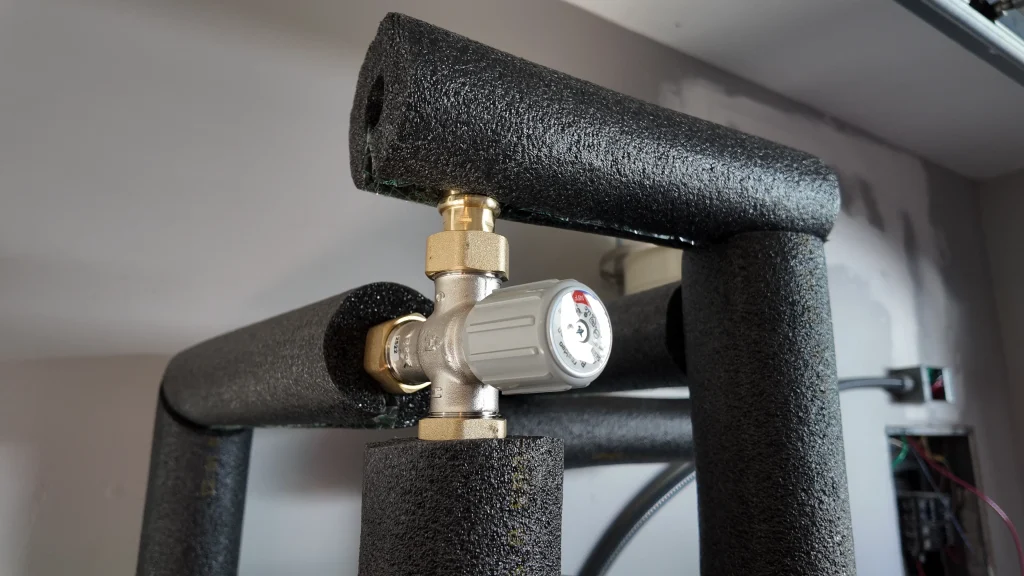
Heated manifolds must be insulated and monitored to prevent:
-
Overheating
-
Precursor decomposition inside lines
-
Fire hazards
Impact of Not Heating the Manifold
Failing to maintain a heated manifold can lead to:
-
Gas condensation: Precursor puddles may form inside lines.
-
Line clogging: Solidified materials block flow, causing downtime.
-
Film defects: Uneven deposition leads to poor electrical properties.
-
Safety risks: Some condensed gases are pyrophoric or highly reactive.
-
Inconsistent results: Variations in precursor delivery make process control impossible.
These issues demonstrate why manifold heating is considered a standard practice in modern CVD systems.
Special Case: MOCVD (Metal-Organic CVD)
Metal-organic precursors such as TMGa or TMIn are extremely sensitive. Without proper heating:
-
Precursors solidify quickly
-
Lines become blocked
-
Deposited films have poor uniformity
MOCVD systems always maintain manifolds in the 150°C – 180°C range. Some systems also heat the source bubblers to ensure constant vapor pressure.
Conclusion – In cvd semiconductor process is manifold kept hot
Manifold heating is a critical but sometimes overlooked part of CVD semiconductor processing. Keeping the manifold hot ensures:
-
Stable gas flow
-
Prevention of condensation and premature reactions
-
Long-term system reliability
-
Reproducible, high-quality thin-film deposition
While not all gases require heating, most CVD precursors, particularly silanes and metal-organic compounds, benefit from manifold temperatures above their condensation points. This practice is essential for modern semiconductor fabrication, where consistency and precision determine the success of each wafer and the overall reliability of electronic devices.
In summary:
-
Yes, manifolds are usually kept hot in CVD processes.
-
Heating prevents precursor condensation, decomposition, and system contamination.
-
Temperatures depend on the type of precursor and deposition method.
-
Manifold heating is as important as chamber heating for process success.
Understanding the manifold’s role in CVD not only improves process outcomes but also informs the design and operation of safer, more reliable semiconductor systems.
For More Visits: Mymagazine

