
 English


































































































































































































































































































































































































![swimsuit edition [abbb] - 1.20 21 swimsuit edition - chapter](https://mymagazine.blog/wp-content/uploads/2025/09/swimsuit-edition-abbb-1.20-21-swimsuit-edition-chapter1-1024x574.webp)





Best AI Software Testing Tools in 2026: Top 5 Platforms Compared

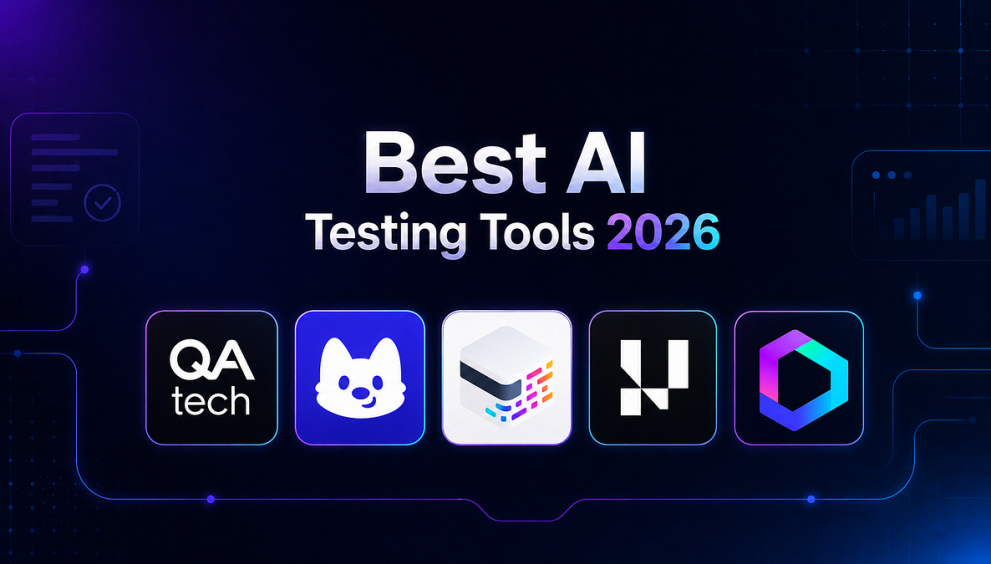
Artificial intelligence has fundamentally changed software testing. What started as AI-assisted test generation has evolved into intelligent platforms capable of creating, executing, maintaining, and even healing automated tests with minimal human intervention. As development teams increasingly adopt AI coding assistants like Claude Code, Cursor, and GitHub Copilot, testing tools are evolving alongside them.
Today’s leading AI testing platforms go beyond simple record-and-playback automation. They use natural language processing, computer vision, large language models (LLMs), and autonomous agents to reduce maintenance, improve test coverage, and accelerate software delivery.
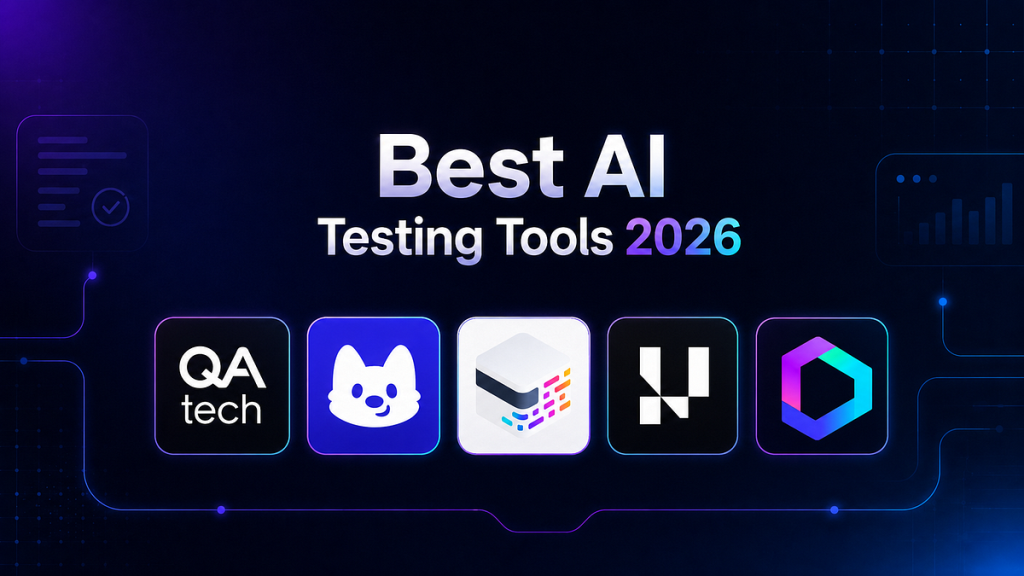
In this article, we’ll explore five of the most innovative AI-driven software testing tools in 2026: testRigor, Quash, Shiplight AI, Midscene.js, and Momentic.
1. testRigor
Best for: End-to-end testing across multiple platforms with minimal coding
testRigor continues to be one of the most comprehensive AI-powered testing platforms available. Unlike traditional automation frameworks that depend heavily on CSS selectors and XPath locators, testRigor allows teams to write tests using plain English. The platform interprets human-readable instructions and converts them into executable automated tests.
One of testRigor’s biggest strengths is its broad platform support. Teams can automate tests across:
- Web applications
- Native and hybrid mobile apps
- Desktop applications
- APIs
- Email workflows
- SMS verification
- Two-factor authentication
- Cross-platform business processes
This makes it possible to automate complex customer journeys that span multiple technologies using a single test.
Another significant advantage is maintainability. Instead of relying on fragile UI locators, testRigor identifies elements based on what users actually see, dramatically reducing test failures after UI changes.
Key Features
- Plain English test creation
- AI-powered test generation
- Self-healing automation
- Cross-platform end-to-end testing
- Visual validation
- Built-in CI/CD integrations
- Support for manual testers without programming experience
Pros
- Extremely accessible for non-technical QA teams
- Minimal maintenance compared to locator-based frameworks
- Covers virtually every testing layer from UI to APIs
- Excellent enterprise scalability
Considerations
Organizations looking for a unified testing platform that enables collaboration between developers, QA engineers, product managers, and business stakeholders will find testRigor especially attractive. It is particularly valuable for teams transitioning from manual testing to automation.
2. Quash
Best for: AI-assisted bug reporting and developer feedback
Quash approaches software quality from a different angle. Instead of focusing solely on automated test execution, it helps teams capture, analyze, and reproduce bugs using AI.
Modern software development generates enormous volumes of bug reports. Developers often spend considerable time trying to reproduce issues before fixing them. Quash significantly shortens this cycle by automatically collecting logs, screenshots, device information, network activity, and reproduction steps.
Using AI, Quash can organize bug reports, identify duplicate issues, summarize problems, and provide developers with the technical context needed to resolve defects quickly.
Key Features
- AI-generated bug summaries
- Automatic reproduction steps
- Session recording
- Screenshot capture
- Crash diagnostics
- Developer-friendly reports
- Integration with issue tracking systems
Pros
- Reduces communication between QA and engineering
- Improves bug quality
- Accelerates defect resolution
- Useful for mobile and web development
Considerations
Quash complements automated testing rather than replacing it. Teams often use it alongside functional testing frameworks to improve post-testing workflows.
3. Shiplight AI
Best for: Engineering teams building software with AI coding agents
Shiplight AI represents a new generation of testing tools designed specifically for AI-assisted software development. Rather than treating testing as a separate activity performed after development, Shiplight integrates directly into AI coding workflows.
The platform allows AI coding agents to generate, execute, and maintain tests as part of the software development process. Tests are written in readable YAML files that remain inside the project’s Git repository, making them easy to review alongside application code.
Shiplight builds on Playwright while adding AI-powered intent recognition and self-healing capabilities. When the UI changes, the platform attempts to repair failing tests automatically instead of requiring engineers to rewrite selectors manually.
Key Features
- Native integration with AI coding assistants
- Intent-based YAML tests
- Self-healing automation
- Git-native workflow
- Built on Playwright
- Local and cloud execution
- Automated verification during development
Pros
- Fits naturally into AI-native engineering workflows
- Version-controlled test definitions
- Reduced maintenance
- Strong developer experience
Considerations
Shiplight primarily targets engineering organizations that already rely heavily on AI coding assistants and Git-centric development workflows.
4. Midscene.js
Best for: Browser automation using AI and natural language
Midscene.js is an open-source framework that combines browser automation with multimodal AI models. Instead of relying entirely on DOM locators, it understands web pages visually and can interact with interfaces based on user intent.
Developers describe actions in natural language, while Midscene.js uses AI to determine how those actions should be performed.
This makes the framework especially useful when working with dynamic interfaces, rapidly changing applications, or websites where traditional selectors frequently break.
Because it integrates well with Playwright, teams can gradually adopt AI-powered interactions without replacing their existing automation infrastructure.
Key Features
- Natural language browser automation
- Visual understanding of web pages
- AI-powered element detection
- Playwright compatibility
- Open-source architecture
- LLM integration
Pros
- Flexible automation
- Excellent for unstable interfaces
- Modern AI-first design
- Easy integration with existing Playwright projects
Considerations
As an open-source framework, Midscene.js may require more engineering expertise than commercial testing platforms, but it offers tremendous flexibility for development teams experimenting with AI-driven automation.
5. Momentic
Best for: Fast-growing product teams seeking AI-powered end-to-end testing
Momentic has gained attention by combining browser automation with AI-generated testing workflows. Instead of requiring users to manually script every interaction, Momentic can generate tests from application behavior while using AI to improve reliability.
The platform focuses heavily on reducing test maintenance through intelligent element recognition and adaptive execution.
Momentic also emphasizes developer productivity by providing quick feedback loops, collaborative workflows, and cloud-based execution.
Key Features
- AI-generated tests
- Self-healing automation
- Intelligent element recognition
- Cloud execution
- Team collaboration
- Continuous testing support
Pros
- Fast onboarding
- Reduced maintenance effort
- Modern user interface
- Good CI/CD integration
Considerations
Momentic is particularly attractive for startups and fast-moving SaaS companies looking to expand automated testing without building large QA automation teams.
Choosing the Right AI Testing Tool
The best AI testing platform depends largely on your team’s workflow and technical expertise.
- Choose testRigor if you need comprehensive cross-platform automation that enables both technical and non-technical users to create and maintain tests.
- Choose Quash if your biggest challenge is improving bug reporting and reducing developer investigation time.
- Choose Shiplight AI if your engineering organization relies heavily on AI coding agents and Git-native workflows.
- Choose Midscene.js if you’re looking for an open-source AI framework that extends Playwright with visual automation.
- Choose Momentic if you want an AI-first cloud platform focused on rapid end-to-end testing.
Final Thoughts
AI-driven software testing has matured significantly by 2026. Rather than simply generating test cases, modern platforms now understand user intent, repair failing tests automatically, analyze defects intelligently, and integrate directly into AI-assisted software development.
While each platform addresses a different part of the testing lifecycle, they all share a common objective: reducing manual effort while improving software quality. As AI continues to reshape software engineering, organizations that adopt intelligent testing solutions will be better positioned to release reliable software faster and with greater confidence.