

 English
















































































































































































































































































































































































































![swimsuit edition [abbb] - 1.20 21 swimsuit edition - chapter](https://mymagazine.blog/wp-content/uploads/2025/09/swimsuit-edition-abbb-1.20-21-swimsuit-edition-chapter1-1024x574.webp)





Why Are Airlines “Deleting” Their Warehouses? The Rise of the Ghost Inventory


In the high-stakes world of commercial aviation, there is a number that keeps executives awake at night: $150,000.
That is the estimated cost, per hour, of an “AOG” (Aircraft on Ground) event for a wide-body jet. When a plane isn’t flying, it isn’t just losing ticket revenue; it is bleeding money in parking fees, crew costs, and passenger compensation.
Historically, the only defense against this financial hemorrhage was hoarding. Airlines and Maintenance, Repair, and Overhaul (MRO) facilities built massive, climate-controlled warehouses. They filled them with billions of dollars worth of spare parts—brackets, clips, nozzles, and ducting—just in case.
This system is wildly inefficient. Industry data suggests that a significant percentage of these spare parts will never be used. They sit on shelves for twenty years, tying up capital, requiring insurance, and eventually being scrapped when the aircraft model is retired. It is a logistics model from the steam engine era applied to the jet age.
But recently, a quiet revolution has begun. Some of the world’s largest aerospace companies are starting to “delete” their physical warehouses. They are replacing rows of metal shelving with hard drives, trading physical atoms for digital bits. They are building “Ghost Inventories.”
The Logistics of “Just-in-Time” vs. “Just-in-Case”
The traditional supply chain is linear: Design → Factory → Warehouse → Shipping → Airport. This chain is slow. If a cabin bracket breaks on a flight from London to Singapore, and the spare is in a warehouse in Dallas, that plane is grounded for at least 24 hours while the part is flown across the world.
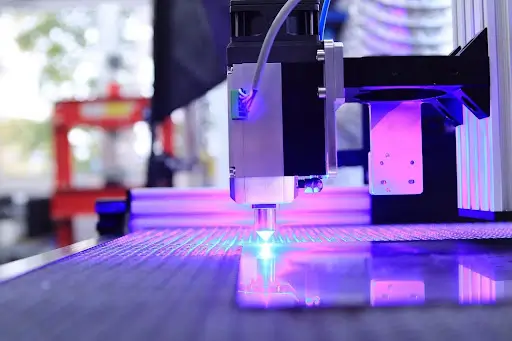
The Ghost Inventory model collapses this chain. The part doesn’t exist physically. It exists as a secure, certified CAD file in the cloud. When the bracket breaks in Singapore, the local maintenance engineer downloads the file and manufactures it on-site. The shipping time is zero. The customs delay is zero. The “warehouse” cost is zero.
The “Long Tail” Problem
This approach is particularly revolutionary for what the industry calls the “Long Tail.”
In aviation, high-turnover parts (like tires and brake pads) are easy to manage. You know you will need them. The nightmare is the low-volume parts—the armrest latch, the coffee maker handle, or the specific duct connector for a 15-year-old aircraft.
No factory wants to spin up a production line to make one coffee handle. It’s too expensive. So, airlines are forced to buy these parts in bulk (buying 50 when they need 1) or wait months for a custom order.
With a digital inventory, the quantity is irrelevant. Making one part costs the same per unit as making a hundred. This allows airlines to support aging fleets without being held hostage by minimum order quantities or bankrupt suppliers.
The Certification Hurdle
Of course, you cannot simply download a car from the internet, and you certainly can’t download a certified aircraft part. The barrier to this digital utopia isn’t technology; it’s trust.
Aviation is built on a foundation of traceability. Every bolt on a plane has a “pedigree”—a paper trail proving who made it, from what metal, and when. In the Ghost Inventory model, who is the manufacturer? Is it the person who designed the file? The person who owns the printer? Or the printer itself?
To solve this, the industry is developing “Digital Rights Management” (DRM) for manufacturing. Just as you stream a movie on Netflix without owning the file, MROs can “stream” a part to their printer. The file is encrypted. The printer reads the file, prints the part, and effectively “expires” the license. The system logs the specific machine, the material batch, and the print parameters, generating a digital birth certificate that satisfies regulators like the FAA and EASA.
The Environmental Impact
Beyond the speed and cost, the environmental argument for deleting the warehouse is compelling.
A traditional spare part might be manufactured in China, shipped to a warehouse in Germany, and finally flown to a broken plane in Brazil. The carbon footprint of that logistics journey often exceeds the carbon footprint of making the part itself.
By moving the file instead of the part, the carbon cost of transportation is eliminated. Furthermore, because these parts are often optimized for the manufacturing process, they can be made lighter. A lighter part means a lighter plane, which burns less fuel over its remaining lifespan.
Conclusion
The era of the “Mega-Warehouse” is ending. We are moving toward a distributed network of micro-factories, located right at the gate.
For the passenger, this means fewer cancelled flights. For the airline, it means unlocking billions in capital previously frozen in inventory. And for the engineer, it means the ultimate freedom: the ability to summon a physical object from a digital void.
This transition from physical stockpiles to on-demand production is the single most disruptive application of 3D printing for aerospace, transforming the industry from a slow-moving freighter into a light-speed digital network. The warehouse of the future isn’t a building you visit; it’s a database you query.