

 English




























































































































































































































































































































































































































![swimsuit edition [abbb] - 1.20 21 swimsuit edition - chapter](https://mymagazine.blog/wp-content/uploads/2025/09/swimsuit-edition-abbb-1.20-21-swimsuit-edition-chapter1-1024x574.webp)





Building Resilience: Strategies for Business Continuity in a Digital Age

Business continuity has shifted from a compliance requirement to a strategic priority. Digital systems support finance, operations, customer engagement, and regulatory reporting. When these systems fail, disruption spreads quickly across the organization. Revenue loss, reputational damage, and compliance exposure follow without delay. Resilient organizations treat continuity planning as an operational discipline rather than a static document. A proactive approach strengthens stability and protects long-term performance.
Why business continuity looks different today
Digital transformation has reshaped how organizations operate and deliver value. Cloud platforms, software integrations, and remote access improve efficiency while increasing dependency on interconnected systems. A failure in one area often triggers downstream disruptions across multiple functions.
Cyber threats compound this challenge. Ransomware, data breaches, and service interruptions target operational continuity rather than isolated assets. At the same time, organizations rely on third-party vendors for technology, logistics, and data processing. Continuity planning must account for internal and external risks within a shared ecosystem.
Identifying critical business functions
Resilience begins with understanding which functions must remain operational during disruption. Critical functions directly support revenue, customer obligations, regulatory compliance, and safety requirements. Noncritical activities tolerate longer recovery timelines without immediate harm.
A Business Impact Analysis (BIA) structures the evaluation of potential disruptions. This process involves teams assessing the financial loss, operational downtime, legal exposure, and reputational damage associated with each business function. Establishing clear priorities through the BIA is essential; it guides the sequencing of recovery efforts and informs critical resource allocation during high-pressure events.
Assessing digital and operational risks
Risk assessment identifies threats capable of interrupting critical functions. Digital risks include cyber incidents, system outages, data integrity failures, and access disruptions. Operational risks include staffing shortages, process breakdowns, and facility-related events.
Assessments require regular updates as environments change. New applications, workforce shifts, and business expansion introduce fresh exposure. Continuous evaluation reveals gaps between documented controls and real operational behavior. This insight enables mitigation before disruption occurs.
Building a resilient continuity framework
A clear continuity framework defines an organization’s preparation, response, and recovery from disruptive incidents. Essential to this is a strong governance structure that provides leadership oversight and clear decision authority. Establishing unambiguous escalation paths is critical for preventing delays during an incident.
Defined roles and responsibilities ensure accountability across teams. Employees understand expectations before disruption occurs. Documented procedures support consistent execution and reduce reliance on individual judgment under stress. Alignment between leadership and operations strengthens coordination and response speed.
Protecting information and maintaining access
Effective continuity response relies on the availability of information. During disruptions, teams need accurate records to inform their decision-making, facilitate communication with customers, and meet regulatory requirements. Inadequate information governance poses a significant risk by causing delays and increasing operational vulnerability.
Controls around access permissions, data integrity, and availability support continuity goals. Role-based access ensures only authorized personnel retrieve sensitive information. Defined retention practices preserve critical records while reducing unnecessary exposure. Strong governance maintains usability even when primary systems or locations become unavailable.
Leveraging technology to support resilience
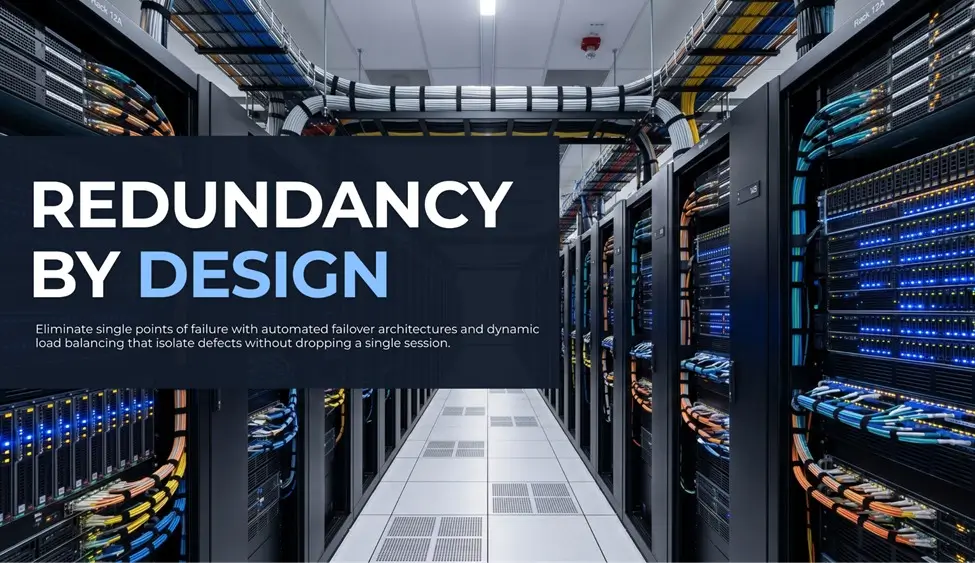
Technology plays a central role in continuity strategies. Redundant infrastructure reduces single points of failure across systems. Monitoring tools provide early detection of performance degradation or security events.
Automation accelerates response by triggering predefined actions and alerts. Visibility across digital environments improves coordination during recovery. Technology investments align best when driven by risk priorities rather than convenience or trend adoption.
Preparing people and processes for disruption
Employees influence continuity outcomes through preparation and response. Clear procedures guide actions during incidents and reduce uncertainty. Training programs reinforce secure behaviors, communication protocols, and escalation requirements.
Exercises and simulations test readiness under realistic conditions. These rehearsals expose weaknesses in plans, tooling, and coordination. Lessons learned inform updates and strengthen confidence across teams. Preparation transforms continuity plans into operational capability rather than theoretical documentation.
Aligning compliance with continuity planning
Strict continuity expectations are placed on sectors like healthcare, finance, and legal services, driven by regulatory frameworks that increasingly focus on the availability, integrity, and recoverability of information. This necessitates structured planning and documentation to ensure compliance with these requirements.
Integrating compliance and business continuity planning offers multiple benefits. It streamlines efforts by eliminating duplication and enhancing both operational resilience and regulatory standing. Furthermore, routine audits confirm readiness and pinpoint areas for enhancement, showcasing governance maturity to regulators, customers, and partners.
Supporting long-term resilience through information governance
Business continuity extends beyond immediate incident response. Long-term resilience depends on disciplined information lifecycle management. Organizations must manage records from creation through retention and secure disposition.
Consistent governance reduces confusion during disruptions and accelerates recovery. Secure handling practices support access, compliance, and operational efficiency. For organizations managing high volumes of sensitive information, integrating records storage solutions into governance strategies supports continuity by improving control, accessibility, and regulatory alignment without disrupting daily workflows.
Testing plans and validating assumptions
Regular testing is essential to validate continuity plans. Exercises like tabletop simulations and functional tests are used to confirm assumptions regarding response time and resource availability. This testing process is crucial as it frequently reveals dependencies that were missed during the initial planning phase.
The outcomes of these validation efforts directly inform the refinement of essential components, including operational procedures, key contact lists, and critical recovery priorities. This ongoing validation process guarantees that the continuity plans remain current and effective as business operations change. Ultimately, testing transforms continuity from a static document into a dynamic, living operational program.
Measuring readiness and improving over time
Resilience requires measurable performance indicators. Metrics such as recovery time objectives, incident frequency, test outcomes, and response effectiveness provide visibility into preparedness. Trends reveal strengths and persistent gaps.
Embedding resilience within the organizational culture, rather than relying on isolated planning efforts, is achieved over time. This continuous evolution is supported by continuous improvement, which ensures that continuity strategies adapt to business growth and technological change. Furthermore, accountability and investment alignment are reinforced through leadership review.
Conclusion
Business continuity in a digital age demands foresight, discipline, and coordination. Resilient organizations anticipate disruption, protect critical functions, and maintain access to essential information. A proactive continuity strategy strengthens stability, supports compliance, and positions the business to recover with confidence.

