

 English






















































































































































































































































































































































































































![swimsuit edition [abbb] - 1.20 21 swimsuit edition - chapter](https://mymagazine.blog/wp-content/uploads/2025/09/swimsuit-edition-abbb-1.20-21-swimsuit-edition-chapter1-1024x574.webp)





The Importance of Data Center Network Automation in High-Performance Environments


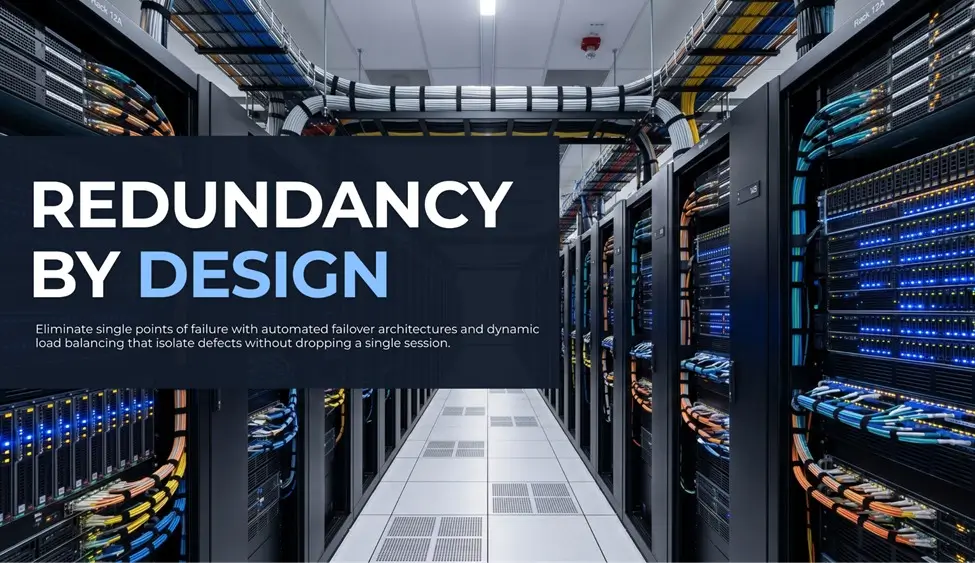
Modern infrastructure teams are operating at a pace that manual networking simply cannot sustain. AI workloads are flooding fabrics with east-west traffic bursts, change windows are shrinking to near-zero, and the expectation of continuous uptime has become a hard business requirement not a stretch goal.
Here’s a number worth sitting with: IT outages cost businesses up to $1.9 million per hour. One bad change. One missed dependency. One snowflake config. That’s the kind of exposure that should make any infrastructure leader rethink what “good enough” really means.
The core argument isn’t complicated. Smarter, disciplined operations reduce risk, accelerate delivery, and build the resilience that high-performance environments genuinely require. Data center network automation is how you get there.
High-Performance Environments That Demand Automated Operations
Running a high-performance data center means confronting workload patterns that were never on the roadmap when CLI workflows were invented.
Consistent, repeatable operations aren’t optional; they’re the difference between staying online and explaining an outage to your leadership team at 2 a.m which is exactly why data center network automation has become essential.
Workload Patterns That Break Manual Networking
AI training clusters and LLM jobs create bursty, all-to-all traffic with brutal latency sensitivity. One misconfigured interface can stall an entire GPU job hours of compute, gone. Storage and HPC environments have their own demands: high throughput, predictable loss characteristics, fast failover. These aren’t tolerant of human-speed response times.
Multi-tenant private cloud adds more pressure. Rapid provisioning, deprovisioning, and segmentation at scale simply don’t happen reliably through manual CLI workflows without accumulating significant risk over time.
The Operational “Blast Radius” of Manual Changes
Here’s a statistic that probably feels familiar: nearly 40% of network professionals say half their workweek disappears into firewall management and network provisioning. That’s a staggering productivity drain, and it still doesn’t account for the configuration drift and undocumented exceptions quietly building up in the background.
When intended state and actual state diverge, troubleshooting gets exponentially harder. Every manual change carries the potential for cascading failures across tightly coupled systems. These aren’t theoretical pressures, they’re the daily reality for teams running some of the most demanding infrastructure on the planet.
Automation’s Real Impact on Reliability and Performance
Once you’ve mapped the operational risks of doing things manually, the next logical question is: what does disciplined automation actually fix, and how far beyond “faster CLI” do those benefits really reach?
Eliminating Configuration Drift With Intended-State Enforcement
The most meaningful reliability gains don’t come from speed alone. They come from stopping the slow, silent erosion of your intended state. Define golden configurations for fabric primitives, underlay, overlay, routing policies, segmentation, and give automation a clear target to enforce continuously.
Continuous validation catches drift before it becomes an incident. Standardized service templates stop one-off configurations from accumulating across the fabric. This is unglamorous, foundational work. It’s also where most outages get quietly prevented.
Latency and Congestion Outcomes Automation Can Directly Improve
Automated QoS baselines and consistent queue, ECN, and PFC policy deployment create a reliable performance floor across every node. Change rollouts for congestion controls and load-balancing policies become repeatable rather than artisanal.
Repeatable performance testing gates before production pushes catch regressions that would otherwise surface as user-facing incidents, at the worst possible moment.
Safer Change Management at Scale
Even the best-tuned fabric is only as resilient as the change process that maintains it. Policy checks, pre-change diffs, and automated rollback plans reduce mean time to innocence dramatically. Parallelized, validated deployments shrink change windows without piling on additional risk.
The Measurable Network Automation Benefits
Understanding how automation improves reliability is valuable. But teams also need to translate these capabilities into KPIs that hold up in budget conversations.
Provisioning Speed and Rollout Consistency
With templates, pipelines, and zero-touch provisioning, rack bring-up that once took days can complete in hours. Standardized artifacts for leaf/spine onboarding produce repeatable results regardless of who runs the workflow. That kind of consistency compounds fast.
Outage Reduction and Risk Control
The highest-ROI outcome of automation is the outage that never happens. Automated pre-flight validation systematically blocks risky configuration deltas from shipping. The usual outage culprits, misconfiguration, inconsistent policy, missed dependencies, all have direct automation countermeasures.
Data Center Efficiency Gains That Show Up in Budgets
Fewer outages protect revenue. But data center efficiency gains show up elsewhere too. Engineers reclaim time previously spent on repetitive tasks and redirect it toward architecture, optimization, and capacity planning.
Reduced rework costs and lower troubleshooting overhead compound into real operational savings over time.
Automation-Ready Architecture for a High-Performance Data Center
Capturing these gains requires more than tooling. It demands a fabric design and operational architecture built from the ground up to support automation at every layer.
Automation-First Fabric Design Patterns
Leaf-spine underlay standardization with BGP-first patterns and consistent addressing gives automation a clean, predictable surface. Overlay standardization using EVPN/VXLAN creates consistent tenant segmentation. A clear separation between underlay lifecycle, overlay lifecycle, and service lifecycle prevents automation logic from becoming entangled across layers.
| Layer | Automation Scope | Key Artifacts |
| Underlay | BGP, addressing, physical links | Routing templates, ASN registry |
| Overlay | EVPN/VXLAN, tenant segmentation | VNI/VRF maps, service profiles |
| Services | Tenant workloads, policies | Service templates, compliance rules |
| Assurance | Drift detection, SLO validation | Telemetry thresholds, intent checks |
Operational Layering Model
A standardized fabric gives automation a clean surface, but scaling it effectively requires a clear maturity model. Source-of-truth accuracy comes first. Devices, links, circuits, tenants, and IPAM must be reliable before any automation runs against them.
Data models and templating standards follow. Then transactional deployment with validation. Finally, continuous assurance with drift detection and SLO monitoring.
Toolchain That Enables Automated Data Center Management
With the right architecture in place, automated data center management depends on a toolchain that avoids sprawl and enforces consistency across every workflow.
Source of Truth as the Foundation
No automation runs reliably without authoritative data quality. Required objects include rack layouts, link wiring, interface roles, VLAN/VNI/VRF mappings, IPAM, BGP ASNs, and tenant metadata.
Platforms like Infrahub from OpsMill combine graph-based data modeling with GitOps workflows, giving teams a structured, versioned foundation that automation logic can actually trust.
Infrastructure-as-Code and CI/CD for Network Changes
A reliable source of truth eliminates ambiguity about what should exist. Pairing it with API-first operations and standardized data models determines how that intent gets translated into consistent configuration.
Version control workflows with PR reviews, automated linting, topology checks, and pre-flight policy validation bring network changes under the same governance discipline as application deployments. Canary rack deployments, phased rollouts, and automated rollback triggers keep risk controlled even as deployment velocity increases.
Best Practices That Keep Data Center Network Automation From Failing
Even the most advanced capabilities need sound operational discipline behind them, otherwise you’re just automating chaos faster.
Standardization Rules That Prevent Automation Debt
Define a limited catalog of supported fabric archetypes, two to four designs maximum. Enforce naming conventions, interface roles, and immutable identifiers across every device. A constrained, well-defined catalog eliminates the snowflake problem before it reaches the automation layer.
Idempotency, Safe Transactions, and Rollback Discipline
Idempotent playbooks and staged commits with health checks, routing adjacency, overlay health, endpoint reachability, ensure every automated execution is predictable and reversible.
Observability designed around intent maps telemetry directly to reachability, policy compliance, and congestion signals rather than raw counters.
Why Automation Is the Foundation, Not a Feature
Data center network automation isn’t an advanced optimization reserved for mature teams with large budgets. It’s the operational foundation that every high-performance data center now requires to function reliably. Faster provisioning, fewer preventable outages, and measurable data center efficiency gains the case extends well beyond engineering.
Assess where your program stands today across source-of-truth accuracy, templates, CI/CD maturity, and assurance coverage. Then pick one high-impact workflow and automate it within the next 30 days. A perfect plan isn’t what moves the needle. Starting does.
Frequently Asked Questions
What is data center network automation, and how does it differ from SDN?
Data center network automation addresses the full operational lifecycle, provisioning, validation, change management, and assurance. SDN specifically focuses on decoupling the control plane from hardware. Automation may envelop SDN or function independently using APIs and data models.
Why does automation matter so much for AI and HPC workloads?
AI and HPC workloads are highly sensitive to latency, packet loss, and configuration inconsistency. Manual changes can’t keep pace with cluster scale or change velocity, making consistent automated operations essential for job completion and SLA adherence.
What network automation benefits should teams measure for ROI?
Track change failure rate, MTTR, provisioning time per rack or tenant, and drift incident frequency. Performance KPIs like latency percentiles, drop rates, and congestion events complete a before-and-after picture worth presenting to leadership.
How do you start if your inventory data isn’t reliable?
Fix the data first. Audit physical and logical inventory, establish a source of truth with authoritative records, and validate it before running any automation against production. Automation built on bad data amplifies inconsistency, it doesn’t fix it.
What security risks come with network automation, and how do you mitigate them?
Automation introduces risks around credential exposure, unauthorized changes, and runaway playbooks. Mitigate by using secrets management, least-privilege automation identities, mandatory code review, and rate limits with human approval gates for high-risk actions.
For More Visits: Mymagazine
