

 English






















































































































































































































































































































































































































![swimsuit edition [abbb] - 1.20 21 swimsuit edition - chapter](https://mymagazine.blog/wp-content/uploads/2025/09/swimsuit-edition-abbb-1.20-21-swimsuit-edition-chapter1-1024x574.webp)





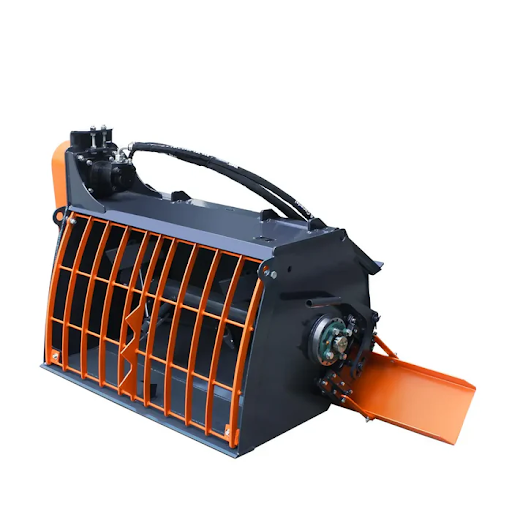
The tumbling action that lets a skid steer concrete mixer blend evenly

Why pouring on your own schedule matters
Across the United States, a great deal of concrete work happens far from a ready-mix plant or on jobs too small to justify a full delivery truck. Ranchers setting fence posts, contractors pouring remote footings, and crews building scattered pads on a large site all face the same constraint: ready-mix arrives on the plant’s clock, and once the truck leaves, the concrete keeps curing whether the crew is ready or not. Rural counties across Texas and the Mountain West, where a pour site may sit miles down a dirt road, feel this acutely.
Mixing on site with a concrete mixer mounted to equipment already on the job lets a crew batch exactly what it needs, when it needs it.
Control over timing is the real product a concrete mixer delivers, not just a tub that spins. When the crew owns the schedule, a pour can wait for forms to be checked, weather to settle, or a second set of hands to arrive, without concrete hardening in the meantime.
Lifting and dropping until the mix is uniform
Good concrete depends on every grain of cement meeting water and coating every piece of aggregate. Simply stirring does that poorly, because heavy stone settles and dry pockets hide in the corners. A rotating drum solves it through repeated lifting and folding.
Inside the drum, angled fins catch the mix as the drum turns, carry it up the wall, and then release it to tumble back down through itself. Each rotation lifts and drops the batch, folding wet and dry material together the way a baker folds dough rather than whisking it. Over many turns, that folding distributes cement and water evenly through the aggregate.
The even blending matters chemically. Cement gains strength by hydration, a reaction in which cement and water bond, and a uniform mix means hydration proceeds consistently throughout. Dry clumps and water-starved pockets become weak points later, so the tumbling action is really about quietly guaranteeing strength.
- Fins lift the mix up the drum wall
- Gravity drops it to fold through itself
- Even hydration builds consistent strength
Where the spinning power comes from
Mixers are best understood by classifying them according to what turns the drum, because the power source shapes how and where each one is used. A small electric or gasoline drum mixer stands on its own legs and suits light, stationary batching near a power source. A towable mixer trails a vehicle and brings larger capacity to a site, but still needs its own engine to spin.
A skid-steer hydraulic unit takes a different path entirely. This kind of concrete mixer draws on the auxiliary hydraulic flow of the host machine to drive the drum, so the same skid steer that hauls material and positions the mixer also powers it. With no separate engine to maintain, the operator controls mixing from the cab and moves the full drum directly to the form. Drum speed can be eased up or down with the hydraulic flow, which gives finer control over blending than a fixed-speed engine allows.
Pouring where the work is
A large drum carried on a skid steer turns the loader into a mobile batching station. Material can be loaded, mixed in transit, and discharged through a side chute aimed straight into a footing or post hole, without barrows shuttling back and forth. On rough or sloped ground where a ready-mix truck cannot venture, the machine simply drives to the pour.
That mobility shortens the distance between mixing and placing, which protects the concrete. The longer fresh concrete sits, the more it stiffens, so cutting the trip from drum to form keeps the mix workable right up to placement.
Getting the proportions and the cleanup right
The most common on-site error is too much water, added to make the mix flow more easily. Excess water weakens the cured concrete, so the water ratio should be measured rather than eyeballed, with workability adjusted carefully instead of flooded. Loading aggregate and cement in a sensible order helps the drum blend without clumping.
Hardened concrete is stubborn, so the drum and chute of a concrete mixer must be rinsed before the batch sets, and hydraulic connections checked for leaks before each session. Skipping the rinse lets residue build up inside the drum, where it slowly steals capacity and unbalances the spin, a common problem in on-site batching operations. Hands and eyes need protection, since wet concrete is caustic and prolonged skin contact causes burns.
Understood as a tumbling machine rather than a simple tub, a skid steer concrete mixer gives a crew uniform, well-timed concrete exactly where the truck cannot reach.