English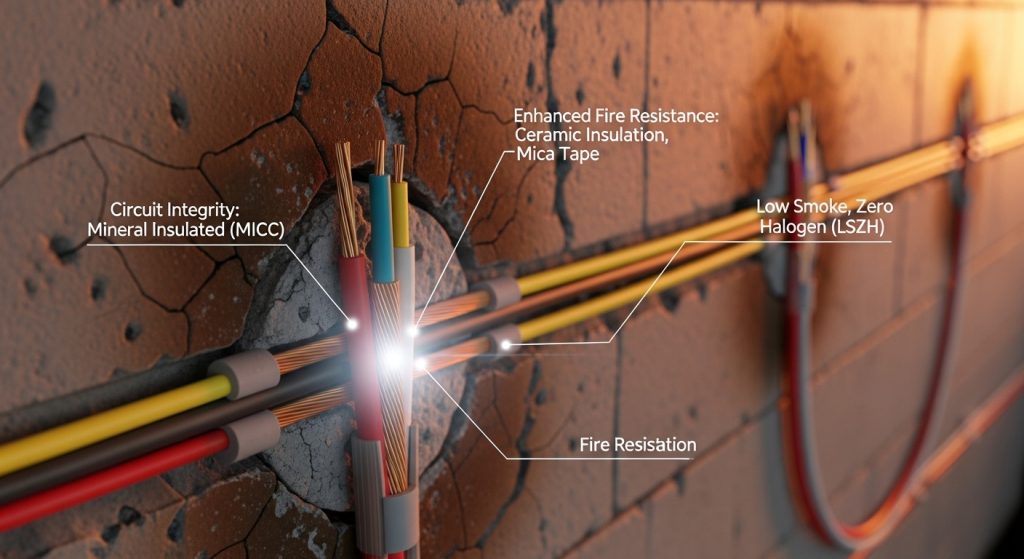


















































































































































































































































![swimsuit edition [abbb] - 1.20 21 swimsuit edition - chapter](https://mymagazine.blog/wp-content/uploads/2025/09/swimsuit-edition-abbb-1.20-21-swimsuit-edition-chapter1-1024x574.webp)





Fire-Resistant Cables: What You Need to Know

Across every building project, encompassing the likes of residential developments, office blocks, schools, hospitals, and even transport infrastructure, there is a need to pay close attention to fire safety.
Most of us are accustomed to thinking of fire safety in terms of such common (and often highly visible) measures as fire alarms, sprinklers, and fire doors.
However, as critical as those solutions unquestionably are, there is at least one other component that decision-makers must not overlook: fire-resistant cables.
You might not be overly familiar, though, with what fire-resistant cables are. Even if you do know about these cables in a broad sense, there may be gaps in your awareness with regard to how they work, where they are used, and other crucial aspects.
So, let’s delve deeper into the essential things for property owners, businesses, and contractors alike to know about fire-resistant cables.
We’re aiming this guide primarily at readers in the UK. However, much of what we state here will also be applicable for people working on building and fire safety projects elsewhere in the world.
What Are Fire-Resistant Cables?
A fire-resistant cable can be defined as an electrical cable that is specifically engineered, in the event of it being exposed to fire, to continue operating for a defined period.
Unlike standard electrical cables that can quickly fail under extreme heat, fire-resistant cables are designed to maintain power and signal transmission for long enough to allow the safe evacuation of occupants and the functioning of emergency systems.
Fire-resistant cables are commonly used in systems where continued operation during a fire is essential. These include the likes of:
- Fire alarm systems
- Emergency lighting
- Smoke control systems
- Sprinkler systems
- Voice evacuation systems
- Firefighter communication systems
- Emergency shutdown systems
The Critical Difference Between Fire-Resistant and Fire-Retardant Cables
A widespread misconception still prevails that fire-resistant cables and fire-retardant cables are basically the same thing. Sure enough, you might well have seen these terms being used interchangeably.
However, for reasons of both compliance and safety, it’s crucial to understand that these are two different types of cable, serving different purposes:
- Fire-resistant cables are designed to continue functioning during a fire. They’re engineered to maintain “circuit integrity”. This means they can be expected to keep on working and transmitting power or signals, even while directly exposed to fire.
- Fire-retardant cables are designed to slow the spread of fire, but they may not continue operating when subjected to fire. These cables are made from materials that self-extinguish once the heat source is removed. This prevents the cable from becoming a “fuse” that carries fire through the building.
How Do Fire-Resistant Cables Work?
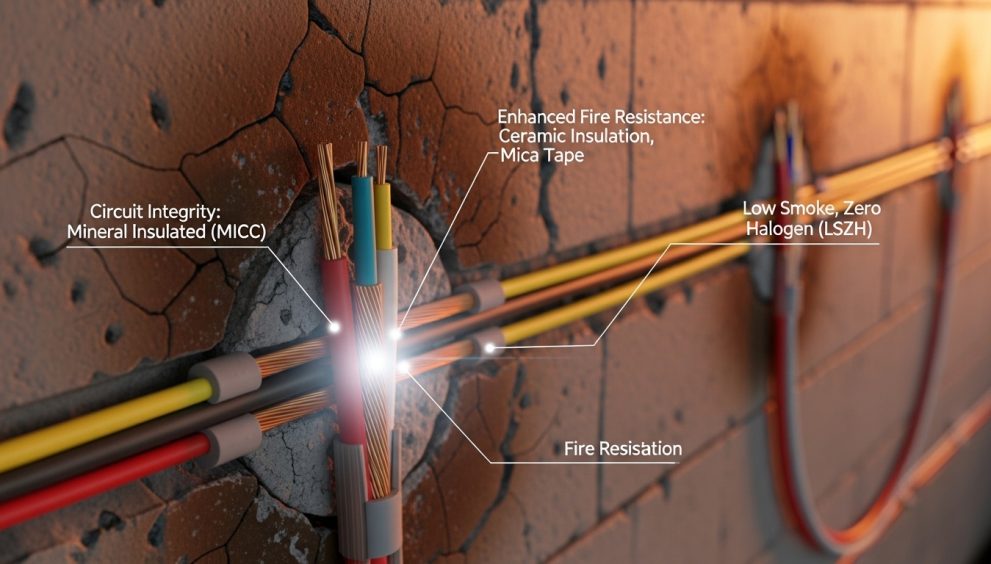
The manufacture of fire-resistant cables involves the use of specialised insulation and protective materials that are able to stand up to high temperatures.
Depending on the specific cable, fire-resistant cables may incorporate:
- Mica tape barriers
- Mineral insulation
- Cross-linked polymers
- Low smoke zero halogen (LSZH) compounds
- Fire-resistant sheath materials
These materials, when subjected to fire, can help preserve the cable’s internal conductors, while preventing short circuits or electrical failure.
Some fire-resistant cables are designed to maintain circuit integrity for 30, 60, 90, or even 120 minutes in the event of them being exposed to fire.
However, the actual length of time for which a given cable can be expected to achieve this will hinge on such aspects as testing standards and installation requirements.
3 Common Types of Fire-Resistant Cables
Here are some of the most widely used fire-resistant cable types in the UK:
- Mineral Insulated Copper Clad (MICC) Cable
Often referred to as pyro cable, MICC cable combines copper conductors with magnesium oxide insulation, all enclosed within a copper sheath.
This type of cable offers excellent fire resistance, high durability, and long service life. It is, however, relatively rigid, which can make the installation process trickier.
- Soft-Skin Fire-Resistant Cable
With their flexible polymer-based insulation and sheath materials, these cables don’t merely deliver good fire performance and flexibility; they’re also renowned for their general ease of use and inexpensiveness as far as the installation process is concerned.
Unsurprisingly, then, soft-skin fire-resistant cables find their way into a broad range of commercial fire alarm systems.
- Low Smoke Zero Halogen (LSZH) Cables
As their name indicates, even when LSZH cables come into contact with fire, they emit very little smoke, and little or no halogen acid gases.
Such qualities help explain why these cables are so trusted for use around public buildings, transport hubs, hospitals, schools, and data centres alike.
Through their reduction of toxic smoke, LSZH cables can significantly improve the safety of the evacuation process if a fire breaks out.
However, there is an important caveat to add here: the mere fact of a cable being LSZH doesn’t automatically mean it will be fire-resistant. This is because “LSZH” describes smoke and halogen performance, rather than necessarily fire resistance.
So, when you’re comparing your options for fire-resistant cables, you will need to carefully scrutinise any given LSZH cable’s fire resistance credentials.
Conclusion: Fire-Resistant Cables Play a Critical Role
Fire-resistant cables may be far from the only components that help ensure the optimal fire safety of modern buildings, but they certainly play an imperative part.
The maintenance of circuit integrity during a fire can go a long way to facilitating safe evacuation, protecting critical services, and minimising risk to life and property.
This is precisely what well-chosen fire-resistant cables can help accomplish at a property for which you may be responsible.